Bespoke Tailor in Chiang Mai: What to Look Before Choosing One
Searching for a Bespoke Tailor in Chiang Mai can seem simple at first. Chiang Mai has a wide range of tailoring businesses, from small neighborhood shops to established studios serving international visitors, professionals and customers looking for formal clothing. The difficult part is not finding a tailor. It is understanding which tailor is actually offering the level of attention, craftsmanship and personalization you expect.
The word “bespoke” can also create confusion. In modern tailoring, customers may encounter terms such as custom, made-to-measure and bespoke, sometimes used interchangeably. Yet the actual process behind those words can be very different. For someone investing in a suit, jacket or wardrobe piece, understanding what happens behind the scenes is more useful than relying on a label displayed outside the shop.
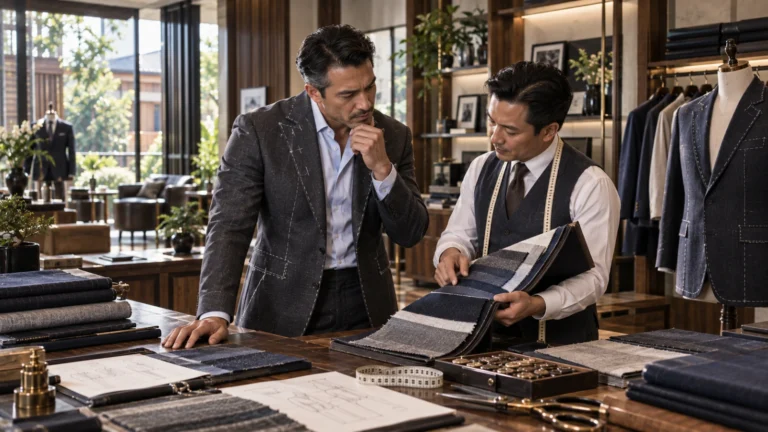
A good Bespoke Tailor in Chiang Mai should begin with you rather than with a fabric book or a price list. Your proportions, lifestyle, profession, preferred silhouette, occasion and the climate in which you will wear the garment all matter. The tailor’s job is to bring those factors together into clothing that looks natural and feels appropriate.
That is why choosing a tailor deserves more consideration than simply comparing prices. A well-made garment begins with good decisions long before the first stitch is sewn.
What Does Bespoke Tailor in Chiang Mai Really Mean?
Bespoke tailoring is centered on the individual wearer. The garment is developed around the customer’s measurements, proportions and requirements rather than relying primarily on a standard garment size.
This distinction matters because bodies are not standardized. Two people may have the same chest measurement but very different shoulder slopes, posture, waist positions, arm lengths and overall proportions. A standard size cannot account for every one of those differences.
A Bespoke Tailor in Chiang Mai should therefore be interested in more than basic measurements. The tailor needs to understand how those measurements relate to one another and how the garment should sit on the individual body.
Bespoke also gives the customer greater involvement in design. Lapel width, jacket length, trouser rise, pocket style, buttons, lining, fabric and silhouette can all be discussed. However, customization should not mean adding as many details as possible. The strongest result is usually one where every detail supports the overall character of the garment.
The purpose of bespoke tailoring is not to make clothing look complicated. It is to make it feel considered.
Look at the Consultation Before Looking at the Price
One of the clearest ways to understand a tailor is to pay attention to the first conversation.
When you meet a Bespoke Tailor in Chiang Mai, notice what questions are asked before you place an order. Are you asked why you need the garment? Do you discuss where you expect to wear it? Does the tailor ask about your preferred fit or explain different options?
A meaningful consultation might involve your profession, lifestyle, travel habits, existing wardrobe and the type of occasions you attend. A customer ordering a business suit may need something very different from a groom preparing for a wedding.
The consultation should also give you an opportunity to explain what you do not like.
Perhaps you dislike very narrow trousers. Perhaps you prefer a softer shoulder. Perhaps you want a traditional silhouette rather than a highly fashionable one. These details matter because tailoring is ultimately personal.
Good Advice from a Bespoke Tailor in Chiang Mai Should Have a Reason
A tailor may recommend a particular fabric, colour or silhouette, but the recommendation should be explained.
For example, if a lightweight wool is suggested for regular use in Chiang Mai, the tailor should be able to explain how its weight and construction relate to the climate. If a particular jacket length is recommended, there should be a reason related to your proportions.
This kind of explanation helps distinguish professional guidance from simple sales language.
A Bespoke Tailor in Chiang Mai should not need to convince every customer to choose the most expensive option. The recommendation should be based on what makes sense for the garment and the person wearing it.
Pay Close Attention to Measurements
Measurements are at the heart of tailoring, but the quality of the process depends on how those measurements are interpreted.
A tailor may measure your chest, waist, hips, shoulders, sleeves, jacket length and trousers. Those figures create the foundation for the garment, but they do not tell the entire story.
Posture is important. Shoulder slope is important. Body balance is important. Even the way someone naturally stands can affect how a jacket needs to be cut.
This is where the experience of a Bespoke Tailor in Chiang Mai becomes valuable. A skilled tailor looks at the relationship between different measurements rather than treating each number as an isolated instruction.
The measurement process should also feel deliberate. You should not feel rushed through it simply because another customer is waiting. At the same time, a long measurement session does not automatically indicate better tailoring. What matters is whether the tailor is actually observing and understanding your proportions.
Fit Is About Movement Too
Ask yourself how you expect to use the garment.
A business professional may spend several hours sitting at a desk. A traveler may wear a jacket during long journeys. A groom may spend an entire day moving between ceremonies, photographs and celebrations.
The garment needs to work in those situations.
When trying on a developing garment, move naturally. Sit down. Walk. Raise your arms. Pay attention to areas that feel restrictive.
Good tailoring should create a balance between a clean silhouette and practical comfort.
Understand the Fabric Before Choosing It
Walking into a tailoring studio and looking through fabric books can be one of the most enjoyable parts of the process. But fabric should be chosen according to purpose rather than appearance alone.
A Bespoke Tailor in Chiang Mai should be able to explain how different fabrics behave. Weight, weave, drape, breathability, wrinkle resistance and durability can all influence how suitable a cloth is for a particular customer.
This is particularly relevant in Chiang Mai’s warm climate. A customer who spends most of the year in Thailand may have different requirements from someone purchasing a suit mainly for use in a colder European country.
Wool offers a wide range of weights and constructions. Linen can provide a relaxed character and strong breathability. Cotton can work well for less formal clothing. Blended fabrics may offer specific practical benefits.
There is no universally perfect fabric.
The right choice depends on how the garment will be used.
Do Not Choose Fabric Only Because It Sounds Luxurious
A prestigious fabric description can be appealing, but the name alone does not tell you whether it is appropriate.
Ask about the cloth’s weight and characteristics. Ask how it handles heat. Ask whether it is suitable for frequent travel. Ask about maintenance and expected durability.
This is particularly important when investing in Premium Suits for regular professional use. A beautiful fabric that is difficult to maintain or uncomfortable in your normal environment may not provide the practical value you expect.
The role of the tailor is to connect fabric characteristics with your actual life.
Examine the Craftsmanship
You do not need to be a professional tailor to inspect workmanship.
Look at finished garments carefully. Examine the lapels, collar, stitching, buttonholes, pockets and overall shape. Look at how jackets hang when worn rather than judging them only while they are displayed.
If possible, ask to see garments similar to the one you intend to order.
A tailor who regularly produces formal business clothing should be able to show examples of that work. Someone specializing in relaxed summer garments may demonstrate a different type of craftsmanship.
When assessing a Bespoke Tailor in Chiang Mai, consistency is more useful than one spectacular photograph. You want to understand what the business normally produces.
Small details can reveal a great deal. Clean stitching, balanced proportions and carefully finished components contribute to the overall appearance of a garment.
Construction Matters
Ask how the jacket is constructed and what level of structure is appropriate for your chosen fabric and intended use.
Different construction approaches create different characteristics. A structured formal jacket will not necessarily be constructed in the same way as a lightweight summer jacket.
You do not have to become an expert in tailoring terminology. Instead, ask the tailor to explain the construction in practical terms.
A good explanation should help you understand what you are paying for.
Ask About the Fitting Process
The fitting stage is where the developing garment can be assessed on your actual body.
When speaking with a Bespoke Tailor in Chiang Mai, ask when the first fitting will take place and what will be evaluated. The tailor may examine jacket balance, sleeve length, chest, waist, trouser position and overall proportions.
The important point is not simply the number of fittings advertised. It is whether the fitting provides meaningful information that can be used to refine the garment.
You should also communicate how the garment feels.
If something feels tight, uncomfortable or unusual, mention it. If you want a slightly different silhouette, discuss it before final finishing.
A fitting is a conversation between the wearer and the tailor.
Alterations Should Be Clear
Before placing your order, ask what happens if adjustments are required.
Find out whether reasonable alterations are included, when they can be performed and how the final collection process works.
This is especially important for tourists visiting Chiang Mai for a limited period. A customer leaving Thailand in two days has different requirements from someone who lives locally.
The timeline should be discussed before production begins, not at the last minute.
Consider the Purpose of the Garment
A suit should be designed around the situations in which it will be worn.
Someone searching for Business Suits may need versatile colours, practical fabrics and a silhouette suitable for meetings and professional environments. A wedding customer may want something more distinctive. Someone looking for evening clothing may prioritize different details.
The purpose also influences how much versatility you need.
If you want one suit to work across many situations, navy, charcoal and other adaptable colours may provide more wardrobe combinations than an unusual shade. If you are building a larger collection, you may have more freedom to choose something distinctive.
A Bespoke Tailor in Chiang Mai should be able to discuss these differences with you rather than treating every customer as if they are ordering the same garment.
Think About Chiang Mai’s Climate
Local climate should not be ignored when selecting tailored clothing.
Chiang Mai’s weather can make fabric weight and breathability important considerations. Customers who live locally may want clothing that remains comfortable for extended periods, while visitors may be purchasing garments for use in several different climates.
A Bespoke Tailor in Chiang Mai can help you balance these requirements.
For example, a lightweight suit may be appropriate for warm-weather daytime use, while a more structured garment could be reserved for formal indoor occasions. Someone traveling regularly between Thailand and cooler countries may want a more versatile middle-weight option.
There is no reason to assume that every customer should choose the same fabric simply because they are shopping in Chiang Mai.
Tourists Should Discuss Timing Early
Chiang Mai is a popular destination for tailoring, particularly among international visitors who want to have custom clothing made during their stay.
If you are a tourist, tell the tailor your departure date immediately.
A Bespoke Tailor in Chiang Mai needs enough information to determine whether your preferred garment can be completed within the available period. Measurements, pattern preparation, construction, fitting and finishing all require coordination.
Do not wait until the day before departure to discover that an adjustment is necessary.
If possible, leave some flexibility in your travel schedule. This gives the tailor more opportunity to refine the garment if required.
Communication Is Especially Important
International customers may use different terminology when describing fit. Words such as “slim,” “classic,” “relaxed” or “modern” can mean different things to different people.
A good tailor should clarify rather than assume.
If you have a suit you particularly like, explain why. You may like its shoulder shape, jacket length or trouser rise rather than the entire design.
Specific communication produces better decisions.
Do Not Compare Tailors Only by Price
Price is an important part of any purchase, but it should not be the only measurement.
When comparing a Bespoke Tailor in Chiang Mai, ask what the price actually includes.
Consider the fabric, pattern development, construction, fittings, finishing and alteration service. Two garments with different prices may involve very different processes.
The cheapest quotation is not automatically the most economical choice if the resulting garment does not meet your expectations. Similarly, a higher price does not automatically guarantee superior craftsmanship.
The useful comparison is between what you receive and what you actually need.
If you plan to wear the garment frequently for several years, fit, fabric suitability and construction may matter more than saving a small amount at the initial purchase.
What Questions Should You Ask Before Ordering?
A short list of questions can make the decision much easier.
Ask how your measurements will be taken and whether posture is considered. Ask how the pattern is developed. Ask which fabrics are suitable for your intended use and why.
Ask when the fitting will happen. Ask how alterations are handled. Ask how long the complete process is expected to take.
If you are ordering several garments, ask how they can work together.
For example, if you are building a professional wardrobe, you may want Custom Shirts that coordinate with your suits rather than selecting every garment independently. Thinking about the wardrobe as a whole can make each individual purchase more useful.
A professional tailor should be comfortable answering these questions.
Signs That the Process Is Being Taken Seriously
There is no single feature that proves a tailoring business is right for you. Instead, look for several consistent signals.
The consultation should be clear. The measurements should be thoughtful. Fabric recommendations should have a reason. The fitting process should be explained. Pricing and timelines should be understandable.
The tailor should also be willing to tell you when something may not work.
Suppose you request an extremely heavy fabric despite planning to wear the suit regularly in Chiang Mai. A knowledgeable Bespoke Tailor in Chiang Mai should be able to explain the potential disadvantages rather than simply agreeing because the fabric costs more.
That kind of professional honesty is valuable.
Tailoring always involves choices and compromises. A very lightweight fabric may behave differently from a heavier cloth. A highly structured jacket may feel different from a soft construction. A very narrow silhouette may restrict movement compared with a more balanced cut.
Understanding those trade-offs allows you to make better decisions.
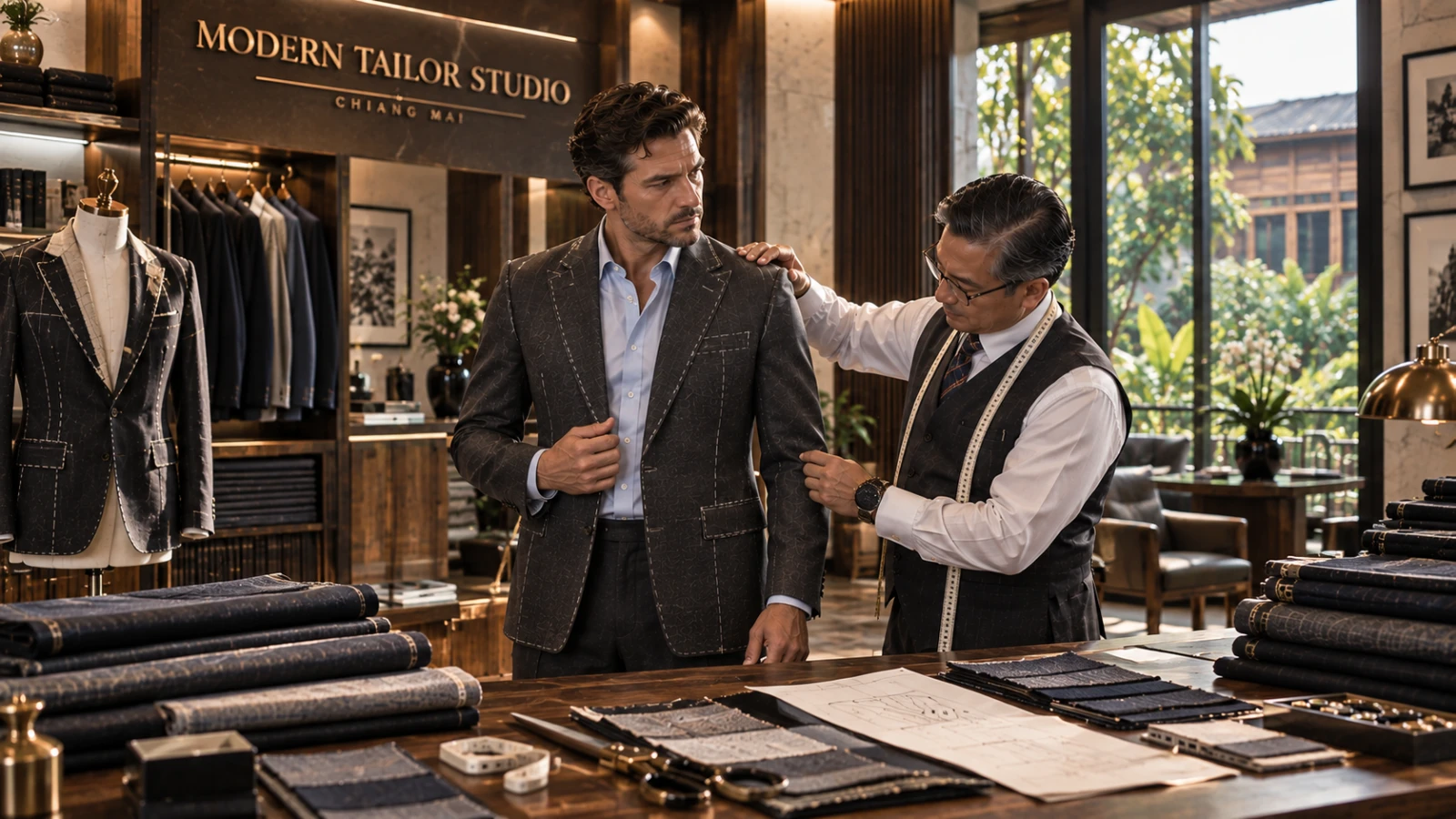
A suit made by a Bespoke Tailor in Chiang MaiBespoke Should Feel Personal, Not Complicated
The appeal of bespoke clothing is not that the process has to feel mysterious.
You should understand what is happening and why.
The tailor brings knowledge of construction, pattern development, fabric and fit. The customer brings personal preferences, lifestyle requirements and the intended purpose of the garment.
When those two sides communicate properly, the result can be considerably more personal than standard clothing.
For a customer looking for a Bespoke Tailor in Chiang Mai, this is perhaps the most useful principle to remember: do not judge the experience only by the finished display garments. Pay attention to how the tailor approaches you as an individual. Bespoke Tailor in Chiang Mai is very much needed. Bespoke Tailor in Chiang Mai are very good here.
Does the conversation feel thoughtful? Are recommendations explained? Are your proportions considered? Is the fabric appropriate? Is the fitting process clear? Are you comfortable asking questions?
Those details tell you far more than a large sign advertising bespoke tailoring.
FAQs about Bespoke Tailor in Chiang Mai
What should I look for in a Bespoke Tailor in Chiang Mai?
Look at the consultation, measurement process, fabric knowledge, craftsmanship, fitting procedure, communication, timeline and alteration policy. The tailor should be able to explain how the garment will be developed around your individual requirements.
What is the difference between Bespoke Tailor in Chiang Mai and custom tailoring?
Terminology can vary between businesses, so ask what process the tailor specifically means by “bespoke.” In general, bespoke involves a greater degree of individual pattern development and fitting than simply modifying a standard garment.
How important are measurements in Bespoke Tailor in Chiang Mai?
Measurements are fundamental, but interpretation is equally important. Posture, shoulder balance, proportions and movement can affect how the garment needs to be constructed.
What fabric is best for a bespoke Tailor in Chiang Mai for a suit?
There is no single answer. Consider the climate, occasion, frequency of wear, travel requirements, desired appearance and personal comfort before choosing a fabric.
How many fittings should I expect from a Bespoke Tailor in Chiang Mai?
The process varies according to the tailor, garment and construction method. Instead of focusing only on a specific number, ask what each fitting is intended to evaluate and refine.
Can tourists order Bespoke Tailor in Chiang Mai ?
Yes. Tourists commonly use tailoring services during their stay, but timing should be discussed before ordering. Provide your departure date so the tailor can explain what is realistically possible.
Is Bespoke Tailor in Chiang Mai worth the additional cost?
That depends on your priorities. Customers who value individual fit, fabric selection, personal design and detailed refinement may find the process worthwhile, while customers seeking a simple inexpensive garment may have different priorities.
Should a Bespoke Tailor in Chiang Mai be very slim?
Not necessarily. The appropriate silhouette depends on your proportions, preferences and intended use. A well-balanced fit should combine appearance with comfortable movement.
Choosing a Bespoke Tailor in Chiang Mai With Confidence
Finding a Bespoke Tailor in Chiang Mai is easy. Finding one whose process matches your expectations requires a little more attention.
Start with the consultation rather than the price. Look at how the tailor understands your requirements, how measurements are taken and whether recommendations are explained. Examine the fabric options and ask why a particular cloth is appropriate for your lifestyle and the climate in which you will wear it.
Then consider the fitting process and construction. Ask what happens if adjustments are needed and whether the timeline works with your schedule.
Most importantly, think about the garment as something you will actually live in. A suit is not simply an object that needs to look good in a photograph. It needs to work when you sit, walk, travel, attend meetings, meet friends or celebrate an important occasion.
That is where thoughtful bespoke tailoring can make a difference.
At Modern Tailor Studio, the objective is to treat tailoring as a personal process rather than a transaction. The customer’s requirements come first, followed by decisions about fabric, proportion, construction and finishing.
Whether the goal is a single formal suit or a broader wardrobe, the same principle applies: good clothing begins with understanding the person who will wear it.
The best reason to choose a Bespoke Tailor in Chiang Mai is therefore not simply the promise of something “custom.” It is the opportunity to have the garment developed with greater attention to your proportions, preferences, environment and purpose.
When the process is handled carefully, the final garment does not need to announce that it is bespoke. Its fit, balance and ease of wear should communicate that for you.