How a Tailor Measures You for a Custom Suit in Chiang Mai
When you order a tailored suit, the measuring appointment is where the garment begins to take shape around your body. Also explain the occasion. Business Suits intended for frequent office wear may benefit from a different balance of structure and comfort than a suit purchased for an evening event. Custom Suit Measurements in Chiang Mai involve much more than checking your chest and waist. A professional tailor considers shoulder width, posture, sleeve length, jacket balance, trouser proportions, and the way you naturally stand and move.
For visitors, understanding Custom Suit Measurements in Chiang Mai can make the experience easier and more productive. You will know what the tailor is checking, why certain measurements matter, and what information you should provide before production begins. The process is usually straightforward, but the details matter because small differences can affect how a finished suit sits.
Why Accurate Measurements Matter
A standard suit is built around a predefined size. A custom garment starts with the individual. That distinction is why Custom Suit Measurements in Chiang Mai are so important.
Two customers can have identical chest measurements but completely different proportions. One may have broader shoulders, a longer torso, a lower waist, or a different posture. Another may have one shoulder slightly higher than the other or prefer more room through the arms. A good tailor identifies these differences rather than relying on a single size label.
The objective is not to collect the largest possible number of measurements. It is to collect the measurements that help the tailor create balance and then interpret them alongside your posture, preferences, fabric, and intended use.
If you are considering Custom Suits in Chiang Mai, the measurement appointment is one of the most important parts of the process.
What Happens Before the Measuring Tape Comes Out?
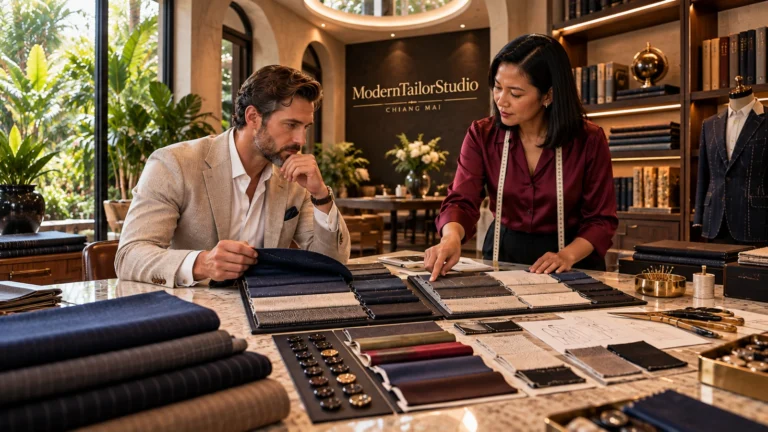
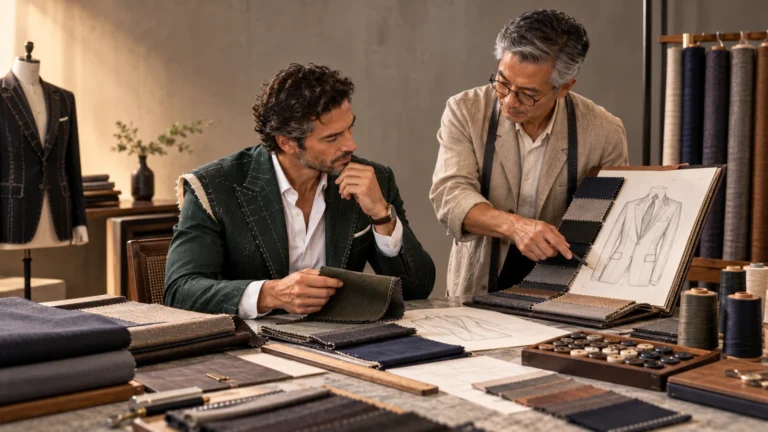
A good appointment usually begins with a conversation. Before taking Custom Suit Measurements in Chiang Mai, the tailor may ask what the suit is for, where you expect to wear it, how formal you want it to be, and whether you have owned tailored clothing before.
You may also discuss your preferred silhouette. Some clients like a clean, contemporary shape, while others prefer a little more room for comfort. A business suit may need a different approach from a wedding suit or a lightweight travel suit.
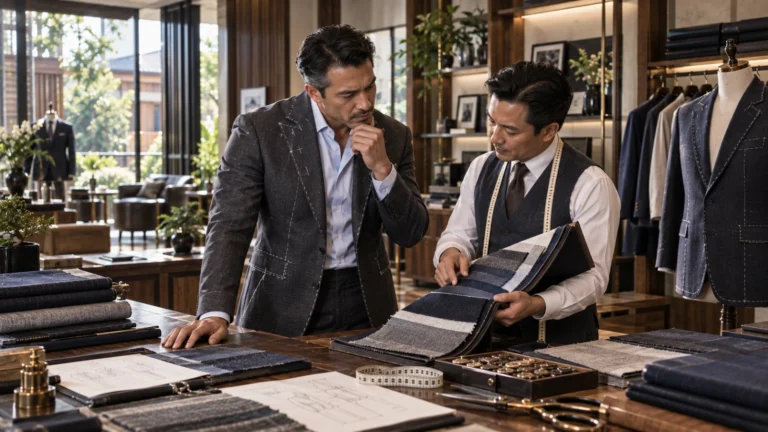
Fabric can also influence the discussion. A structured wool behaves differently from linen or a softer lightweight cloth. The tailor needs to understand the intended garment before interpreting the measurements.
This first conversation is particularly useful for tourists in Chiang Mai. If you are leaving the city after a few days, tell the tailor your schedule before the order is finalized. The production and fitting timeline should be realistic.
The Main Body Measurements
Custom Suit Measurements in Chiang Mai generally include several core dimensions. The exact list can vary according to the tailor, garment, and construction method, but the following measurements are commonly important.
Chest
The chest measurement establishes one of the main dimensions of the jacket. The tape should sit around the fullest part of the chest without being pulled excessively tight.
The tailor may also observe how your chest and shoulders relate to each other. The measurement alone does not determine the final jacket shape.
Waist
The waist measurement helps establish the jacket’s lower circumference and the trouser waistband. The tape should be positioned correctly rather than pulled tightly to create an artificially smaller number.
Comfort matters. A suit that looks sharp in the fitting room but restricts breathing or sitting is unlikely to become a favourite garment.
Hips and Seat
The hip measurement can be relevant to both trousers and overall jacket proportion. For trousers, the seat needs enough room for comfortable movement without excessive fabric.
A tailor may also visually assess the relationship between waist and hips rather than relying only on the numerical measurement.
Shoulder Width
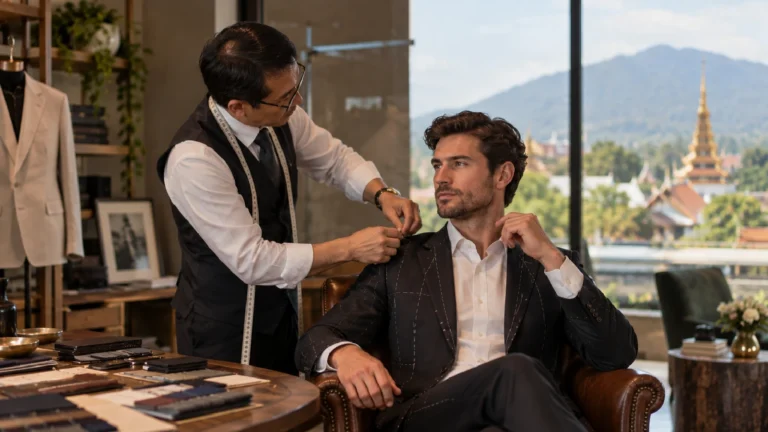
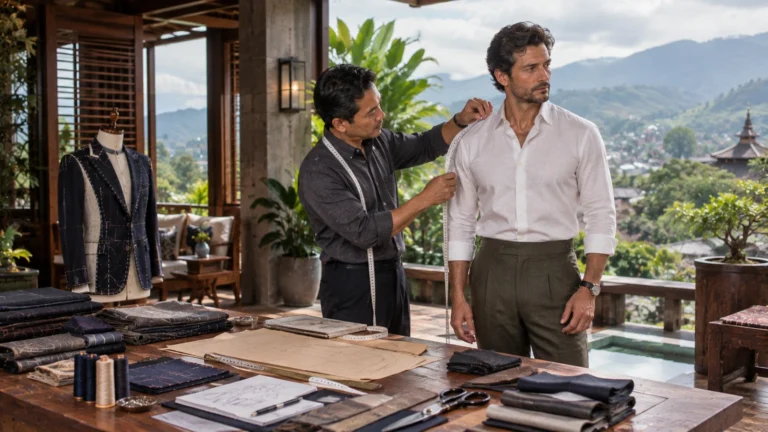
Shoulder width is one of the most visually important measurements in Custom Suit Measurements in Chiang Mai. It helps establish where the jacket’s shoulder line should finish.
The tailor may measure from shoulder point to shoulder point or use other methods depending on the construction system. Posture is also considered because shoulders do not always sit perfectly level.
Neck
The neck measurement helps determine shirt and jacket collar proportions. It should allow comfortable movement without creating unnecessary space around the neck.
If you plan to wear specific dress shirts with the suit, mention that during the appointment.
Measuring Sleeve Length
Sleeve length looks simple, but it requires more than measuring from one point to another. The tailor may consider your arm position, shoulder structure, wrist position, and the amount of shirt cuff you prefer to show.
During Custom Suit Measurements in Chiang Mai, the tailor may ask you to relax your arms naturally rather than holding them in a rigid position. This gives a more useful indication of how the sleeve should be cut.
If you regularly wear a watch or particular shirt cuffs, mention this. The final sleeve proportion can be adjusted according to how you actually dress.
A good sleeve should allow movement while maintaining a clean line. Excessive length can hide the hand, while an overly short sleeve can make an otherwise elegant jacket look unfinished.
Measuring Jacket Length
Jacket length is usually considered in relation to your height and proportions rather than as a fixed number.
The tailor may measure from the shoulder or neck area toward the desired hem position, but the final decision also involves visual assessment. A person with a long torso may need a different proportion from someone of the same height with shorter legs and a longer lower body.
This is why Custom Suit Measurements in Chiang Mai should include visual evaluation. Numbers provide a foundation, but tailoring is ultimately about how multiple dimensions work together.
The jacket should create a balanced relationship with the trousers. If it is too short, the torso can look compressed. If it is too long, the overall silhouette may appear heavy.
Measuring the Trousers
Trouser measurements typically include the waist, seat, thigh, knee, and inseam. Depending on the style, the tailor may also consider the rise and leg opening.
The rise is particularly important because it changes the relationship between the trousers and jacket. A higher rise can create a more traditional proportion, while a lower rise produces a different contemporary silhouette.
During Custom Suit Measurements in Chiang Mai, the tailor may ask about your preferred trouser break. Your shoes are relevant here because trouser length should be assessed with footwear in mind.
If you are ordering a wedding suit, bringing shoes similar to those you will wear on the day can help. The same applies to business shoes if the suit is intended primarily for professional use.
Why Posture Matters
One of the biggest differences between basic sizing and professional tailoring is attention to posture. A person may stand with rounded shoulders, a forward head position, a slightly higher shoulder, or a natural curve through the back.
A tailor should observe how you stand rather than asking you to hold an artificially perfect posture. Custom Suit Measurements in Chiang Mai become more useful when they reflect your actual body position.
Posture can influence jacket balance, sleeve pitch, shoulder treatment, and other construction decisions. It may also explain why a standard jacket appears to fit correctly in one area but creates excess fabric elsewhere.
This is one reason a measuring appointment should not be rushed.
The Tailor May Measure More Than Once
Do not be surprised if a tailor checks a measurement again. Rechecking does not necessarily indicate a problem. It can be a simple way to confirm accuracy before the pattern is prepared.
Custom Suit Measurements in Chiang Mai may also be compared with visual observations and, in some cases, measurements from an existing garment that fits you well.
If you own a jacket or pair of trousers that you particularly like, bringing them can help communicate your preferences. The tailor can look at the proportions while still adapting them to your body.
The objective is not to copy another garment blindly. It is to understand what you already know works for you.
What Should You Wear to the Appointment?
Wear clothing that allows the tailor to access the areas being measured easily. A relatively fitted shirt is often useful because bulky clothing can interfere with accurate measurements.
Shoes can also matter, particularly for trousers. If possible, wear or bring footwear similar to what you expect to use with the finished suit.
During Custom Suit Measurements in Chiang Mai, avoid making yourself stand unnaturally straight. The tailor needs to see your normal posture.
If you have reference photographs, bring them. A photograph can communicate a preferred jacket length, trouser shape, lapel proportion, or general silhouette more effectively than technical terminology.
What You Should Tell the Tailor
Measurements provide numbers, but they cannot explain everything. Tell the tailor how you want the suit to feel.
If you prefer more room through the chest, dislike tight sleeves, want a cleaner trouser line, or normally carry your phone in a particular pocket, mention it.
This information can be particularly useful during Custom Suit Measurements in Chiang Mai because the final garment needs to work with your lifestyle, not simply reproduce a measurement chart.
If the garment is for a wedding, tell the tailor how long you expect to wear it, what shoes you will use, and whether you need the suit to work with a particular shirt or accessory. Wedding Suits can require especially careful planning because the garment needs to work throughout a long day of ceremony, photographs, movement, and reception.
How Chiang Mai’s Climate Can Affect Measurements
Measurements themselves do not change because of climate, but climate can influence how the garment should be designed.
Chiang Mai’s warm conditions can make fabric weight, breathability, lining, and ease important considerations. A lightweight suit may be cut and constructed differently from a heavy formal garment intended for cooler environments.
During Custom Suit Measurements in Chiang Mai, discuss where you will wear the suit. If it is primarily for air-conditioned offices, the approach may differ from a suit intended for outdoor daytime events.
The same measurement can produce a very different wearing experience depending on the cloth and construction. This is why measurement, fabric, and purpose should be considered together.
From Measurements to a Finished Pattern
Once the measurements are complete, the tailor uses them to establish the garment’s proportions and construction. The process may involve a paper pattern, digital pattern, or a combination of systems depending on the workshop.
Custom Suit Measurements in Chiang Mai are therefore not the finished product. They are the technical foundation from which the garment is developed.
A professional tailor may make allowances for movement and construction rather than simply transferring every measurement directly onto the pattern. Ease is intentional space that allows the garment to function.
This distinction is important. A jacket does not need to have exactly the same circumference as the body underneath it. It needs enough carefully controlled space to move while maintaining the desired silhouette.
Why a Fitting Still Matters After Measurements
Even accurate Custom Suit Measurements in Chiang Mai cannot predict every aspect of the finished garment. A fitting provides an opportunity to assess the actual construction.
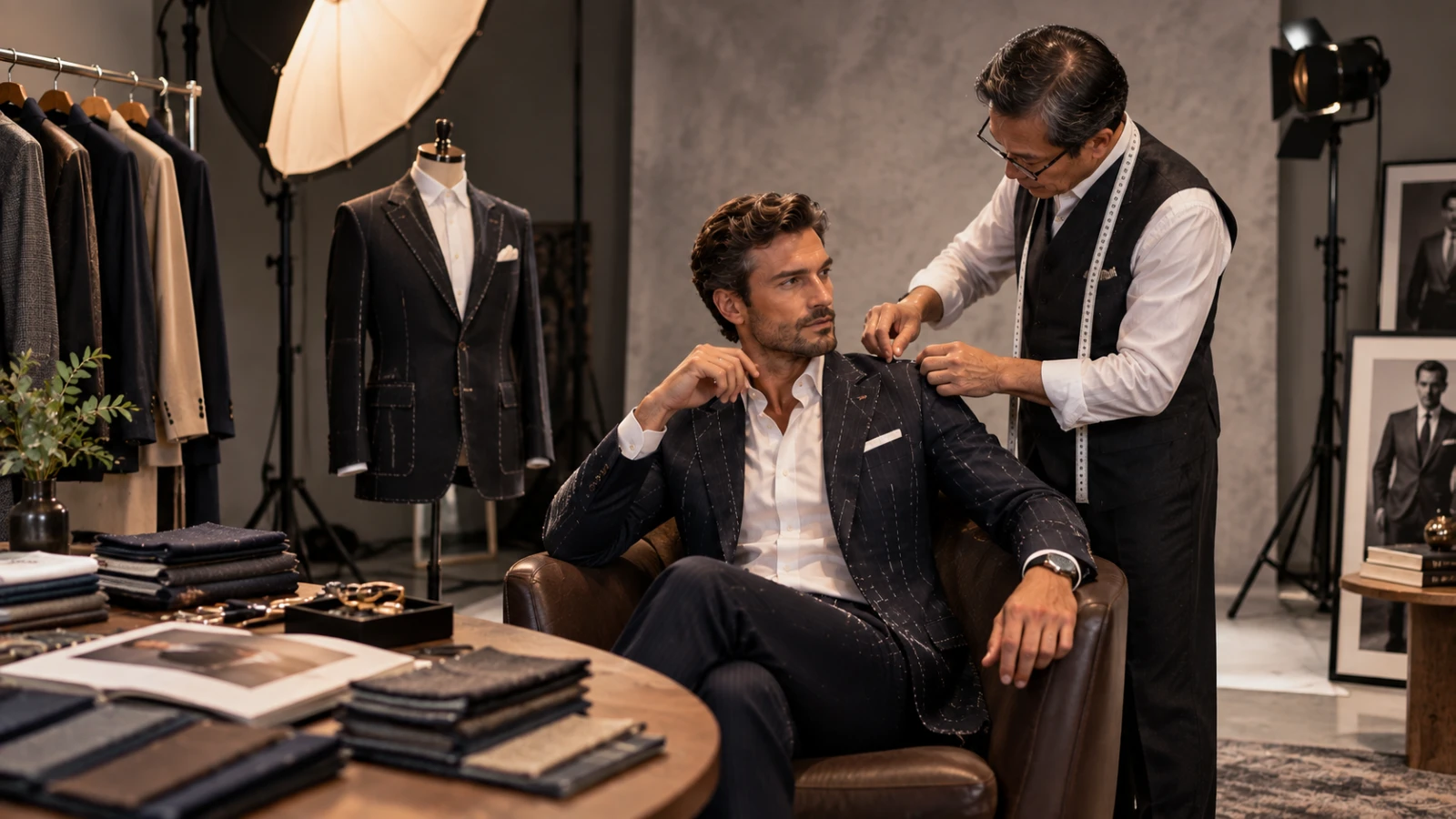
During a fitting, the tailor can check shoulder balance, collar position, chest, sleeve length, jacket length, waist shaping, trouser seat, and other details. Temporary stitching or unfinished sections may be visible at this stage.
You should move naturally during the fitting. Sit down, walk, and raise your arms if requested. These movements can reveal issues that are difficult to identify while standing still.
If something feels wrong, explain the sensation clearly. Saying that the sleeve feels restrictive or that the trousers pull when sitting gives the tailor useful information.
Common Mistakes Customers Make while giving Custom Suit Measurements in Chiang Mai
One mistake is assuming that more measurements automatically mean better tailoring. Quality depends on how measurements are taken, interpreted, and translated into construction.
Another mistake is staying silent about comfort. Customers sometimes assume that the tailor knows exactly what they want without explanation. A clear conversation can prevent unnecessary adjustments later.
A third mistake is focusing entirely on the jacket and ignoring trousers. A suit is a complete outfit, and the proportions of the two pieces need to work together.
Finally, some tourists underestimate the importance of timing. If you have a fixed departure date, mention it at the beginning of the process rather than at collection. If you are searching for Best Tailor in Chiang Mai you can also ask how different fabrics and construction options affect the way the garment will fit and wear.
Questions to Ask During the Appointment for Custom Suit Measurements in Chiang Mai
You do not need to know tailoring terminology to have a productive appointment. Ask simple questions:
- Which measurements are most important for my body?
- What fit are you recommending and why?
- How will my posture affect the jacket?
- What amount of trouser break would suit this style?
- How much ease are you allowing for movement?
- When will the fitting take place?
- What should I bring to the fitting?
- When will the finished suit be ready?
These questions can help you understand the process and make more informed choices.
If you are exploring Premium Suits, you can also ask how different fabrics and construction options affect the way the garment will fit and wear.
Frequently Asked Questions about Custom Suit Measurements in Chiang Mai
How long do Custom Suit Measurements in Chiang Mai take?
The measurement portion itself is usually relatively quick, but the complete appointment can take longer because it may include consultation, fabric selection, style decisions, and discussion of the fitting schedule.
What all is needed for Custom Suit Measurements in Chiang Mai?
Common measurements include chest, waist, hips, shoulders, neck, sleeve length, jacket length, trouser waist, seat, thigh, knee, and inseam. The exact process varies by tailor and garment.
Can a tailor measure posture?
A tailor does not simply measure posture with a tape. They observe how you naturally stand and use that information alongside measurements when considering garment balance and construction.
Should I bring shoes for Custom Suit Measurements in Chiang Mai?
Yes, particularly if trousers are being ordered. Shoes can help the tailor determine the appropriate trouser length and break.
Are measurements enough to guarantee a perfect fit for my Custom Suit Measurements in Chiang Mai?
No. Measurements create the foundation, but fabric, pattern balance, construction, posture, and fitting adjustments also influence the final result.
What if I am only visiting Chiang Mai briefly should i opt for Custom Suit Measurements in Chiang Mai?
Tell the tailor your departure date before ordering. The available timeline can affect which fitting stages are practical and when the finished garment can be collected.
Making the Right Choice about Custom Suit Measurements in Chiang Mai
Good tailoring starts with accurate information, but Custom Suit Measurements in Chiang Mai are about more than numbers written on a measurement sheet. The tailor needs to understand your proportions, posture, preferences, lifestyle, fabric choice, and intended use.
The most useful appointment is one where you communicate clearly and allow the tailor to observe how you naturally stand and move. Bring appropriate shoes, wear suitable clothing, explain your schedule, and ask questions when something is unclear.
For visitors looking beyond a single garment, Custom Suits Chiang Mai can provide a broader understanding of how suits, shirts, trousers, and other pieces can be developed around individual proportions.
Start Your Tailoring Journey of Custom Suit Measurements in Chiang Mai
If you are considering a tailored suit in Chiang Mai, the measuring appointment is worth treating as an important part of the experience rather than a routine formality. The numbers taken during Custom Suit Measurements in Chiang Mai become the foundation for the pattern, but the quality of the final result also depends on communication, observation, fabric, construction, and fitting.
A well-planned appointment gives the tailor better information and gives you a clearer understanding of what you are ordering. Whether your goal is a professional wardrobe, a wedding outfit, or a versatile suit for travel, accurate measurements are where the process begins.