
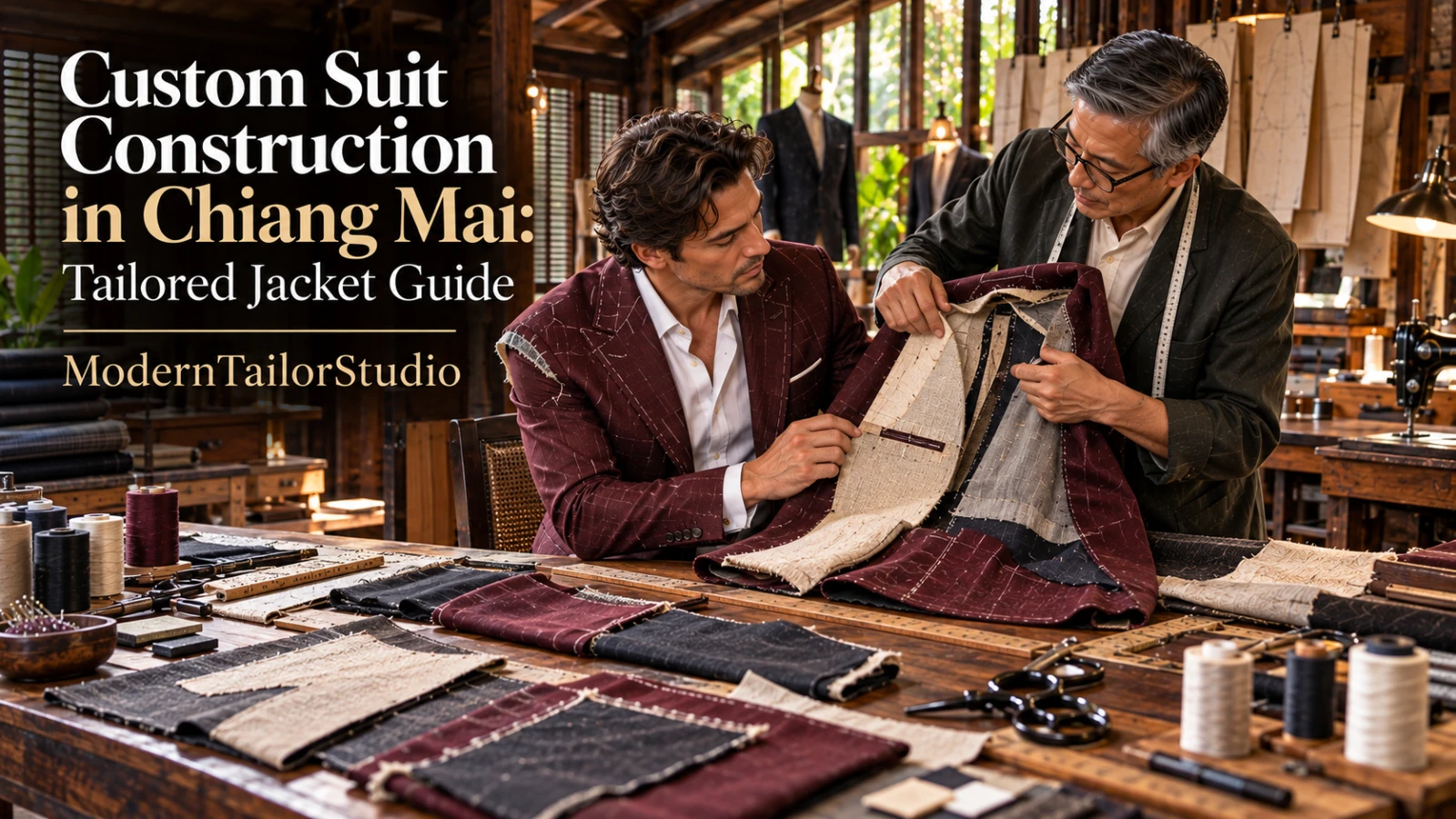
Custom Suit Construction in Chiang Mai: What Goes Into a Tailored Jacket?
For a wardrobe built around individual garments, Men’s Custom Suits in Chiang Mai can be a useful starting point for exploring different fabrics, silhouettes, and construction options suited to your lifestyle. When you look at a finished tailored jacket, most of the work is hidden. You see the fabric, lapels, buttons, pockets, and overall silhouette, but underneath those visible details is a carefully assembled structure that determines how the jacket hangs and moves. Custom Suit Construction in Chiang Mai is therefore about much more than selecting a beautiful fabric and taking measurements. It is the process of turning those choices into a functioning garment.
For tourists visiting Chiang Mai, understanding Custom Suit Construction in Chiang Mai can make the tailoring experience much easier to navigate. Terms such as canvas, fusing, lining, padding, sleeve pitch, and jacket balance can sound technical when you first encounter them. Knowing what these elements actually do allows you to ask better questions and understand what you are paying for.
A tailored jacket is essentially a three-dimensional structure built around the body. Every layer has a purpose, from the outer cloth to the internal canvas and the smallest finishing details.
Custom Suit Construction in Chiang Mai – What Does Suit Construction Actually Mean?
The phrase Custom Suit Construction in Chiang Mai refers to how the different components of a jacket are assembled and how the internal structure is attached to the outer fabric.
The construction method influences the jacket’s shape, flexibility, durability, weight, and overall wearing experience. Two jackets made from the same fabric can feel very different if they use different construction techniques.
At the simplest level, you can think of a tailored jacket as having three broad layers: the outer cloth, the internal structural components, and the lining. Within those layers are numerous smaller pieces that work together.
The purpose is not simply to make the jacket look structured. The construction needs to help the garment maintain its shape while allowing it to move naturally with the wearer.
For customers considering Custom Shirts in Chiang Mai, construction is therefore worth discussing alongside fabric and fit.
The Outer Fabric Is Only the Beginning
The cloth is the most visible part of a suit, but it is only one component of the finished jacket.
Wool is widely used for tailored clothing because it can provide a combination of drape, resilience, breathability, and versatility. Linen and cotton can create a more relaxed character, while blends can provide different performance characteristics.
When discussing Custom Suit Construction in Chiang Mai, ask how the selected cloth works with the proposed construction. A lightweight fabric may require a different internal treatment from a heavier cloth.
The same principle applies to climate. Chiang Mai’s warm conditions can make lightweight construction particularly relevant for certain garments, although a formal suit may still require more structure depending on its purpose.
A good tailor should be able to explain why a particular construction and fabric combination makes sense for the garment you are ordering.
Custom Suit Construction in Chiang Mai – The Canvas Inside the Jacket
One of the most important hidden components is the canvas.
A canvas is an internal layer that helps shape the jacket front and allows the cloth to develop a more natural relationship with the body. Traditionally, canvas can be made from materials such as wool or blends designed for tailoring.
In a more structured jacket, the canvas helps create the chest and lapel shape. It can also contribute to the way the jacket drapes over time.
This is why Custom Suit Construction in Chiang Mai should not be judged entirely by what you can see from the outside. Much of the garment’s character comes from what is hidden between the outer cloth and lining.
Different construction approaches can provide different levels of structure. The appropriate choice depends on the garment, fabric, budget, intended use, and desired silhouette.
Custom Suit Construction in Chiang Mai – Full Canvas, Half Canvas and Fused Construction
You may hear three terms when discussing jacket construction: full canvas, half canvas, and fused.
A full-canvas jacket uses a canvas structure extending through most of the front of the jacket. The construction can produce a sophisticated drape and is traditionally associated with high-end tailoring.
A half-canvas jacket uses canvas through the upper and chest areas while relying on a different construction through the lower front. This can provide a balance between structure, flexibility, weight, and cost. A fused jacket uses adhesive to attach the internal structure to the outer fabric. This method can be efficient and can produce a clean appearance, particularly in certain ready-to-wear garments.
The point is not that one method is automatically suitable for every customer. When considering Custom Suit Construction in Chiang Mai, ask what construction is being used and why it has been selected for your particular garment.
Custom Suit Construction in Chiang Mai – What the Canvas Does to the Lapels
Lapels are among the most recognizable features of a tailored jacket, and construction influences how they sit.
A well-constructed lapel should create a clean roll rather than simply appearing as a flat folded piece of fabric. The internal structure, pressing, stitching, and cloth all contribute to the final result.
In Custom Suit Construction in Chiang Mai, the lapel can be designed according to the intended style. Notch lapels are versatile, peak lapels can create a more formal appearance, and shawl lapels are strongly associated with eveningwear.
Width also matters. A very narrow lapel can create a different visual proportion from a broader one. The choice should relate to your body proportions and the character of the suit.
Custom Suit Construction in Chiang Mai -The Chest Piece and Jacket Shape
The chest of a tailored jacket needs enough structure to create a smooth transition from shoulder to waist.
Internal chest pieces can help shape this area. The amount of structure influences how formal or relaxed the jacket appears.
A traditional business jacket may use more structure, while a soft summer jacket can have a lighter construction with less internal padding.
This is particularly relevant when ordering in Chiang Mai because the climate may make a softer construction attractive for some customers. However, the right decision depends on where you will wear the suit. A European traveller returning to a colder climate may have different requirements from someone who plans to wear the garment primarily in Southeast Asia.
Custom Suit Construction in Chiang Mai – Shoulder Construction
Shoulders have a major influence on the visual character of a jacket. Some suits use pronounced padding to create a stronger silhouette. Others use minimal padding and rely more heavily on the wearer’s natural shoulder shape.
In Custom Suit Construction in Chiang Mai, shoulder construction should be considered alongside posture and body proportions. A jacket should not simply impose a generic shoulder shape on every customer.
The tailor may use different levels of padding, canvas, or shaping depending on the desired result. A good shoulder should create a clean transition into the sleeve without looking excessively rigid.
Sleeve Head and Sleeve Pitch
The sleeve is more complicated than it appears.
The sleeve head connects the sleeve to the shoulder, while sleeve pitch describes the angle at which the sleeve hangs from the shoulder. This can be influenced by posture and the natural position of the arm.
If the sleeve pitch is incorrect, wrinkles can appear even when the sleeve length is correct. This is another reason Custom Suit Construction in Chiang Mai involves more than basic measurements. A tailor needs to understand how the jacket will sit on a moving body . When you try on a jacket, do not focus only on sleeve length. Look at the entire shoulder and upper-arm area.
Custom Suit Construction in Chiang Mai – The Armhole and Movement
The armhole is the opening where the sleeve joins the body of the jacket. Its shape and position influence mobility and comfort.
A high armhole can allow the jacket body to remain relatively stable while the arms move. A lower armhole can create a different wearing experience. There is no single armhole shape that is ideal for everyone. Construction needs to take account of the intended silhouette and the wearer’s proportions.
For tourists, this matters because a suit may be worn while travelling, sitting at dinners, attending events, or moving between indoor and outdoor environments.
Custom Suit Construction in Chiang Mai – The Role of the Lining
The lining is the visible interior layer of many tailored jackets, but it also has practical purposes. It can make the jacket easier to put on and take off, help protect the internal structure, and contribute to the overall finish.
Lining choices also allow customers to personalize their garments. A classic solid lining creates a restrained appearance, while a patterned lining can introduce a private detail that is only visible when the jacket moves.
During Custom Suit Construction in Chiang Mai, discuss lining weight as well as colour. In a warm climate, the internal construction can influence comfort just as much as the outer fabric. A lightweight jacket with appropriate lining can feel very different from a heavily structured garment.
Custom Suit Construction in Chiang Mai – Interlinings and Internal Reinforcement
Inside the jacket are additional layers that help stabilize different areas. Interlinings can support the chest, lapels, front panels, pockets, and other sections. Their purpose is to help the garment maintain the desired shape.
These components are rarely visible to the customer, but they contribute significantly to the final appearance. This is one reason price comparisons between tailoring services can be difficult. Two jackets may look similar on a hanger while using different internal materials and construction methods.
When comparing Custom Suit Construction in Chiang Mai, ask what is actually being used inside the garment rather than judging solely by the outer cloth.
Custom Suit Construction in Chiang Mai – How the Jacket Is Pressed
Pressing is a major part of tailoring. Heat, moisture, pressure, and specialized pressing techniques are used to shape different sections of the jacket. Proper pressing can help create the roll of the lapel, shape the chest, and establish clean lines.
The tailor is not simply ironing the garment flat. Different sections require different treatment.
A skilled pressing process can significantly influence the final silhouette. This is especially important when working with natural fibres because they respond to heat and moisture in particular ways. Pressing continues throughout construction rather than being something done only at the very end.
Custom Suit Construction in Chiang Mai – Pockets Are Part of the Construction
Pockets may seem decorative, but they are integrated into the jacket’s structure.
A breast pocket, flap pocket, jetted pocket, or patch pocket creates a different visual effect. The placement and size of pockets influence the balance of the front.
For a formal business suit, relatively restrained pocket treatment is common. A casual linen jacket may use patch pockets to reinforce its relaxed character. Pocket construction also requires reinforcement because pockets are functional parts of the garment. A well-designed pocket should withstand normal use without distorting the jacket front.
Buttonholes and Buttons
Small details often reveal the level of finishing in a jacket. Buttonholes require careful stitching and clean edges. The buttons themselves can be made from different materials and selected to complement the fabric.
The front button stance also affects the jacket’s proportions. A higher or lower button position changes the visual relationship between chest and waist.
Sleeve buttons can be decorative or functional depending on the construction. Some tailored jackets use working buttonholes, allowing the sleeve to be opened, although the practical value depends on the garment. These details form part of the final stage of Custom Suit Construction in Chiang Mai.
The Jacket’s Internal Balance
One of the most important concepts in tailoring is balance.
A jacket needs to sit correctly from front to back and from shoulder to hem. If the balance is wrong, the garment can pull, collapse, or create excess fabric in particular areas.
Balance is influenced by posture, torso shape, jacket length, shoulder position, and construction. This is why two people with similar measurements can require different patterns. A professional tailor evaluates the body as a whole rather than treating every measurement as an isolated number.
How Construction Affects Fit
Construction and fit are closely connected.
A good pattern provides the basic proportions, while internal construction helps maintain those proportions. The fabric and structural layers then work together to create the final silhouette.
If the jacket is poorly fitted, expensive internal construction will not automatically solve the problem. Conversely, a carefully fitted pattern can make a simpler construction look very polished.
This is why Custom Suit Construction in Chiang Mai should be considered together with measurement and fitting rather than as a completely separate topic. The best result comes from coordinating pattern, cloth, structure, and finishing.
Construction for Chiang Mai’s Climate
Climate is an important consideration when selecting construction.
A heavily structured jacket can create a more formal silhouette, but additional internal layers may also add weight. For warm-weather use, a softer construction can sometimes provide greater comfort.
This does not mean that all Chiang Mai suits should be unstructured. A formal business suit or wedding jacket may benefit from additional support.
Instead, construction should reflect the actual purpose of the garment.
If you are visiting Chiang Mai as a tourist and taking the suit home to Europe, explain where and when you expect to wear it. The tailor can then consider whether a lightweight tropical construction or more traditional structure makes sense.
What Tourists Should Ask a Tailor
If you are unfamiliar with tailoring terminology, you do not need to become an expert before ordering.
Ask straightforward questions:
- What construction method are you using?
- Is the jacket fused, half canvas, or full canvas?
- What material is used for the internal canvas?
- How much structure will the shoulders have?
- What type of lining is recommended?
- How will the construction suit Chiang Mai’s climate?
- How many fittings are included?
- What alterations are possible after the first fitting?
These questions can make Custom Suit Construction in Chiang Mai much easier to understand.
A good tailor should be able to explain the answers without relying on complicated terminology.
Construction and the Cost of a Suit
Construction is one factor that can influence the price of a tailored jacket.
Higher-cost garments may involve more expensive cloth, more complex internal construction, greater handwork, more detailed finishing, or additional fitting stages. However, price should not be treated as a direct measurement of quality.
Ask what you are actually receiving.
If a tailor describes a jacket as premium or luxury, ask about the fabric, construction, lining, fittings, and finishing. This makes the comparison more meaningful than simply comparing the final price.
For customers exploring Party Suits, understanding construction can make fabric and price comparisons much more practical.
How to Inspect a Finished Jacket
Once the jacket is finished, inspect it under normal conditions. Look at the shoulder line, collar, lapels, sleeve length, jacket balance, button closure, pockets, lining, and overall silhouette.
Put the jacket on and move. Sit down, walk, and raise your arms. The garment should feel comfortable and maintain its shape without excessive pulling.
Look inside the jacket as well. Examine the lining and finishing around seams, pockets, and vents.
You do not need to judge every stitch like a professional tailor. The purpose is simply to make sure the finished garment matches the design and fitting decisions discussed earlier.
Frequently Asked Questions about Custom Suit Construction in Chiang Mai
What is the most important part of Custom Suit Construction in Chiang Mai?
There is no single component that determines the entire quality of a jacket. Pattern, fabric, internal structure, pressing, fitting, and finishing all work together.
What is the difference between canvas and fused Custom Suit Construction in Chiang Mai?
Canvas uses an internal layer that is generally stitched into the garment, while fused construction relies on adhesive to bond internal components to the outer cloth. Each method has different characteristics.
Is full canvas always necessary?
Not necessarily. The appropriate construction depends on the suit’s purpose, fabric, climate, desired silhouette, budget, and personal preference.
Is a lightweight suit less formal?
Not automatically. A lightweight garment can still be beautifully structured and appropriate for formal occasions. Formality depends on fabric, colour, cut, styling, and construction.
Does construction affect durability?
It can. The materials and techniques used inside the jacket influence how it holds its shape and responds to wear. However, durability also depends on fabric quality, workmanship, maintenance, and frequency of use.
Should tourists ask about construction before ordering?
Yes. Understanding the construction helps you compare tailoring options more intelligently and gives you a clearer idea of what you are purchasing.
Making the Right Choice for Custom Suit Construction in Chiang Mai
Understanding Custom Suit Construction in Chiang Mai changes the way you look at a tailored jacket. Instead of seeing only the fabric and exterior styling, you begin to understand the layers, structure, pressing, balance, and finishing that create the final garment.
For tourists, this knowledge can be particularly useful. You may be comparing several tailors, choosing between different fabrics, or deciding whether a lighter construction makes sense for your destination and climate.
The right construction is not necessarily the most complicated or expensive option. It is the one that matches the purpose of the suit, the fabric, your proportions, your comfort preferences, and the way you intend to wear it.
If you want to understand the broader tailoring process, exploring Custom suits Chiang Mai can help you see how consultation, measurements, construction, fitting, and finishing connect.
Start Your Tailoring Journey of Custom Suit Construction in Chiang Mai
A finished jacket may look simple from the outside, but Custom Suit Construction in Chiang Mai involves a surprising amount of hidden work. Canvas, interlinings, shoulder structure, sleeves, lining, pressing, pockets, buttons, and balance all contribute to the final result.
The next time you visit a tailor in Chiang Mai, ask what is happening underneath the fabric. Understanding the construction gives you a better basis for comparing garments and helps you make decisions based on how the suit will actually look and feel when worn.


