How to Choose the Right Suit Fit in Chiang Mai
Choosing a suit from the Best Tailor Chiang Mai is often presented as a question of colour, fabric, or lapel style. In reality, fit is what determines how the garment looks when you stand, walk, sit, and move. If you are shopping for tailoring in Northern Thailand, understanding Suit Fit in Chiang Mai is especially useful because the right silhouette needs to work with your proportions as well as the local climate and the occasions for which you will wear it.
Suit Fit in Chiang Mai is not about choosing the smallest size possible. A good fit creates clean lines while leaving enough room for natural movement. It should make the wearer look composed without making the garment appear strained. That balance becomes easier to achieve when you know which areas of a suit deserve the most attention.
What Does a Good Suit Fit Actually Mean?
A good Suit Fit in Chiang Mai should look balanced from the shoulders to the hem of the trousers. The jacket should follow the body without pulling across the chest, collapsing around the collar, or creating excessive folds. The trousers should sit securely at the waist and fall cleanly through the leg.
This sounds straightforward, but bodies vary considerably. Two men with the same chest measurement can have different shoulder slopes, torso lengths, waist positions, postures, and leg proportions. This is one reason Suit Fit in Chiang Mai should not be reduced to a single chest or waist measurement.
The purpose of tailoring is to account for those differences. Instead of making every customer fit a standard block, a tailor can adjust proportions, balance, and ease according to the individual.
For someone building a versatile wardrobe, it can also help to look at Premium Suits for examples of how fabric, construction, and silhouette work together. The goal is not to copy a particular suit exactly, but to understand what creates a polished overall shape.
Start With the Shoulders
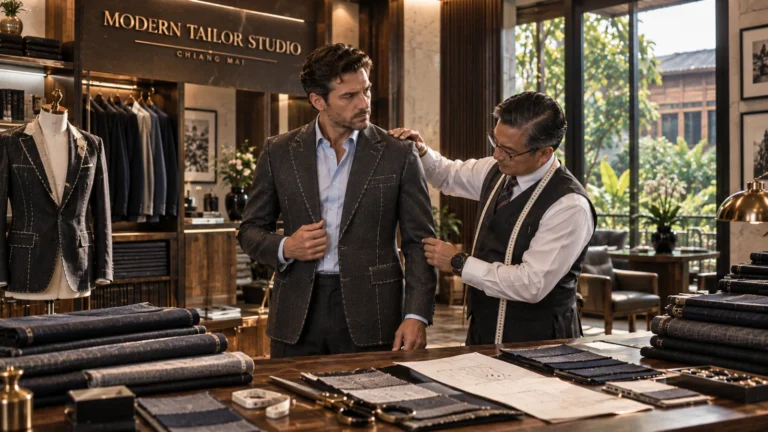
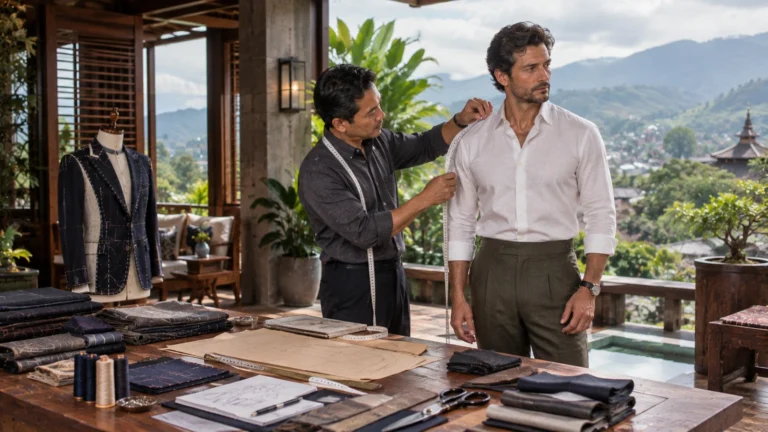
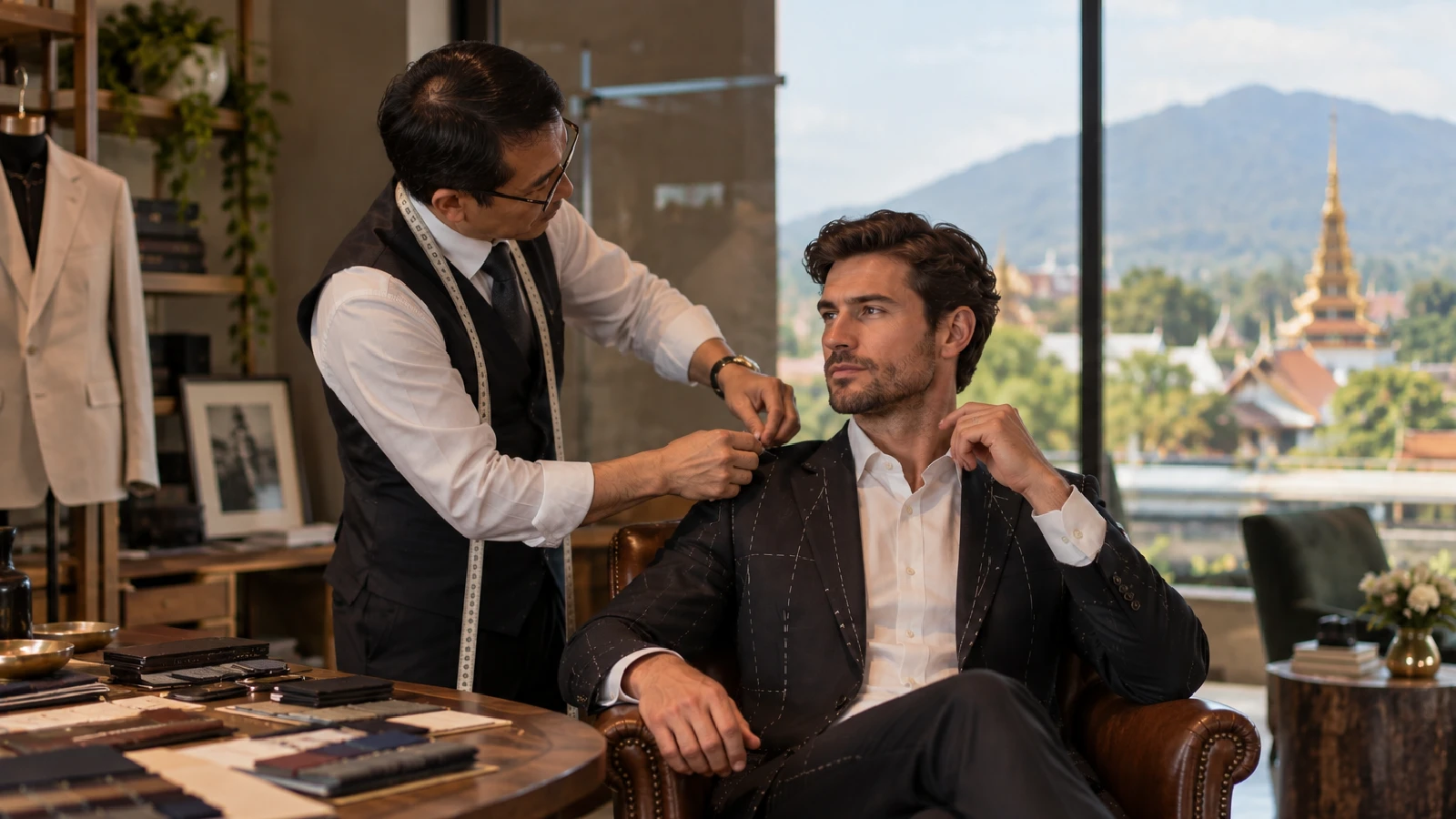
When evaluating Suit Fit in Chiang Mai, start with the shoulders. The shoulder line establishes the visual structure of the jacket and is one of the areas that should receive careful attention during a fitting.
The shoulder seam should generally finish close to the natural edge of your shoulder. If it extends noticeably beyond it, the jacket can look oversized. If it ends too far inside the shoulder, the garment can appear restrictive and create tension.
A good Suit Fit in Chiang Mai should also allow the jacket to hang naturally from the shoulders. Look at the collar and upper back. Excessive rippling, a collar that pulls away from the neck, or obvious tension can indicate that the jacket needs adjustment. For a broader wardrobe plan, you can also explore Custom Suits Chiang Mai and consider how different fabrics and silhouettes can complement the suits you already own.
Shoulder fit is particularly important because many other alterations cannot completely compensate for a poorly proportioned shoulder. A tailor can make useful changes elsewhere, but the initial structure still matters.
Check the Chest and Button Area
The chest should feel comfortable when the jacket is buttoned. In Suit Fit in Chiang Mai, the button area is one of the easiest places to see whether a jacket is too tight.
If the fabric pulls into strong horizontal or diagonal lines when the button is fastened, there may not be enough room through the chest or waist. On the other hand, excessive fabric around the front can make the jacket appear shapeless.
A well-balanced jacket creates a smooth line from the chest toward the waist. It should close naturally without requiring you to pull the fronts together.
This is where communication with the tailor becomes important. Some clients prefer a close contemporary silhouette, while others want more room for travel, business meetings, or long periods of sitting. The right Suit Fit in Chiang Mai should reflect how you actually use the garment.
Pay Attention to Jacket Length
Jacket length affects the entire proportion of a suit. If the jacket is too short, the torso can look visually compressed. If it is too long, the wearer can appear overwhelmed by the garment.
There is no single jacket length that works identically for every body type. Height, torso length, trouser rise, and preferred style all influence the final decision.
During Suit Fit in Chiang Mai, look at the relationship between the jacket and trousers rather than judging the jacket in isolation. A balanced combination creates a continuous visual line through the body.
For a traditional business wardrobe, a moderate jacket length can provide versatility. For a more contemporary style, a slightly different proportion may be appropriate. The important point is that the decision should be intentional rather than based only on a generic size label.
Sleeve Length and Shirt Cuff
Sleeve length is another detail that can make a suit look refined. The jacket sleeve should normally allow a small amount of shirt cuff to appear when your arms rest naturally.
During Suit Fit in Chiang Mai, the tailor should assess sleeve length with your posture and preferred shirt style in mind. A sleeve that is excessively long can make an otherwise well-fitted jacket look untidy, while a sleeve that is too short can make the garment appear awkward.
Your arms do not remain perfectly still throughout the day. A proper fitting should therefore consider natural movement rather than judging sleeve length only while you stand rigidly in front of a mirror.
If you regularly wear French cuffs, watches, or particular shirt styles, mention this during the appointment. Small details can influence how the final sleeve should be finished.
The Collar Should Sit Cleanly
The jacket collar deserves more attention than it usually receives. In a good Suit Fit in Chiang Mai, the collar should sit comfortably around the neck without a large visible gap or excessive bunching.
Collar problems can sometimes be caused by posture or by differences between the jacket’s balance and the wearer’s body. This is why simply measuring the neck is not enough.
Stand naturally when the tailor evaluates the collar. Do not force your shoulders backward or lift your chin to create a more formal posture. The suit needs to work with the way you naturally stand.
A clean collar, balanced shoulder line, and smooth chest together create much of the visual polish associated with a well-tailored jacket.
Evaluate the Waist Without Over-Tightening
A shaped waist can make a suit look elegant, but excessive suppression can quickly make it uncomfortable. Suit Fit in Chiang Mai should provide definition without turning the jacket into a restrictive layer.
When the jacket is buttoned, you should be able to breathe and move naturally. There should not be severe pulling around the button or obvious strain through the side seams.
This is especially relevant in Chiang Mai, where you may move between warm outdoor conditions and air-conditioned interiors. A suit that is cut unnecessarily close can become uncomfortable during travel or extended wear.
If you are buying several suits for professional use, consider whether the silhouette will remain practical throughout a normal working day. Business Suits can be elegant without being excessively slim, and a balanced fit is often easier to wear repeatedly.
Trouser Waist and Rise
The trousers are half of the suit, so Suit Fit in Chiang Mai cannot be judged by the jacket alone. Start with the waistband. It should sit securely without requiring a belt to hold the trousers in place.
The rise affects both comfort and visual proportion. A lower rise creates a different silhouette from a medium or higher rise, particularly when paired with a structured jacket.
During a fitting, sit down and walk naturally. If the waistband digs into your body or the trousers slide significantly, the fit may need adjustment.
The seat should also be assessed. Excess fabric can make the trousers look loose, while excessive tension can create visible horizontal lines. A tailor can often refine this area without changing the overall character of the trousers.
Trouser Length and Break
Trouser length should be considered alongside footwear. The amount of break depends on the desired style, trouser width, fabric, and shoe shape.
A traditional business suit may use a subtle break, while a more contemporary silhouette may have a cleaner, shorter finish. Neither should be selected simply because it is currently fashionable.
Suit Fit in Chiang Mai should ultimately be about proportion and intended use. If you are ordering a suit for a wedding, bring shoes that are close to what you expect to wear at the event. If the suit is for business travel, think about the shoes you normally use for work.
This small preparation step can make the final trouser length much more accurate.
Slim Fit, Modern Fit, or Classic Fit?
One of the most common mistakes is treating fit categories as universal standards. Terms such as slim, modern, tailored, and classic can vary between brands and tailors.
Instead of asking only for a label, explain how you want the suit to feel and look. Do you want a defined waist? More room through the chest? A cleaner trouser line? A slightly longer jacket? These descriptions are often more useful.
Suit Fit in Chiang Mai should be personalized rather than selected from a menu of fixed silhouettes. Your proportions should determine how the chosen style is interpreted.
A slim-looking suit does not need to be tight. A classic suit does not need to look loose. The difference is usually found in proportion, shaping, and construction rather than simply the amount of fabric.
Consider Chiang Mai’s Climate
Climate should influence your choice of fit because comfort affects how often you will actually wear a suit. Chiang Mai’s warm conditions can make fabric weight, breathability, and construction particularly relevant.
A very close-fitting jacket combined with a heavy fabric may feel less practical for regular daytime use. A breathable wool, linen, cotton, or lightweight blend may provide a different balance depending on the occasion.
This does not mean every suit in Chiang Mai should be lightweight or relaxed. A formal evening event, business meeting, or wedding may call for a more structured garment. Suit Fit in Chiang Mai should therefore be considered together with fabric and intended environment.
If you are planning a wedding, for example, the fitting should take account of the ceremony, photographs, reception, footwear, and expected weather. Wedding Suits can be structured and elegant while still allowing enough movement for a long day.
Move During the Fitting
One of the simplest ways to assess Suit Fit in Chiang Mai is to move. Stand naturally, raise your arms, sit down, walk a few steps, and reach forward if the tailor asks you to.
A suit is not a sculpture. It needs to function while you live your day. Movement can reveal problems that are invisible when you stand perfectly still.
Pay attention to the shoulder area when you raise your arms. Notice whether the trousers pull when you sit. Check whether the jacket rises excessively when you reach forward.
The goal is not to eliminate every wrinkle. Some movement wrinkles are completely normal. The purpose of Suit Fit in Chiang Mai is to distinguish natural movement from persistent tension caused by an incorrect fit.
Your Posture Changes the Fit
Posture is one of the reasons custom tailoring can produce a more individual result than standard sizing. Some people stand with their shoulders slightly forward, while others naturally carry one shoulder higher.
A fitting should observe you in a relaxed position. Trying to imitate a model’s posture can produce measurements that do not reflect how you actually wear clothes.
Suit Fit in Chiang Mai should account for these natural differences where possible. The tailor may adjust the jacket balance, sleeve pitch, shoulder treatment, or other construction details according to the individual’s posture.
This is particularly valuable when the suit is intended to become a frequently worn part of your wardrobe.
Fabric and Fit Work Together
Fabric changes how a suit behaves. A soft lightweight cloth may drape differently from a structured wool, even when the measurements are identical.
For that reason, Suit Fit in Chiang Mai should not be separated completely from fabric selection. A tailor can recommend different construction or ease depending on the cloth and the purpose of the garment.
If you want a formal business suit, a structured wool may provide the visual authority you are looking for. For relaxed travel, a softer fabric can create a more effortless appearance.
The best choice is the one that makes sense for your actual wardrobe. Rather than choosing a fabric only because it looks impressive under shop lighting, think about where and when you will wear the suit.
How a Tailor Adjusts the Fit
Once the main areas have been assessed, the tailor can identify practical alterations. These may involve sleeve length, trouser length, waist suppression, trouser seat, jacket balance, or other construction details.
Not every issue can be solved equally easily. Shoulder structure and major proportion changes may have different limitations from simple sleeve or trouser adjustments. This is why an experienced fitting process is valuable before final construction.
Suit Fit in Chiang Mai should involve an honest conversation about what can and cannot be changed. A professional tailor should not promise that every garment can be transformed into every possible silhouette.
The fitting is also the right time to discuss comfort preferences. If you travel frequently, sit for long periods, or prefer a relaxed armhole, mention it. These practical details can influence the finished garment.
Choosing Fit for Different Occasions
Your intended use should influence Suit Fit in Chiang Mai. A suit for a corporate environment may need a restrained silhouette, versatile colour, and comfortable construction for repeated wear.
A dinner suit can use a different level of formality and may be worn for shorter periods. A wedding suit may need to balance elegance with the demands of a full day of movement and photography.
If you are expanding your wardrobe, think in terms of roles rather than collecting similar suits. One garment can serve business needs, another can cover formal occasions, and another can provide a lighter option for travel.
This approach can make your tailoring budget more useful because each suit has a defined purpose.
Common Suit-Fit Mistakes to Avoid
One common mistake is choosing a jacket based only on the chest size. Another is assuming that tighter automatically means better fitted. Both can lead to uncomfortable garments.
A second mistake is ignoring trousers. A beautiful jacket paired with poorly proportioned trousers will still make the complete suit look unbalanced.
A third mistake is copying a photograph without considering your own body. A particular cut may look excellent on one person but require significant adaptation for another.
Suit Fit in Chiang Mai should be based on your proportions, lifestyle, climate, and purpose. These factors are more useful than simply following a trend.
It is also worth avoiding rushed decisions. If you are staying in Chiang Mai for several days, allow enough time for the tailor to assess the garment and make appropriate adjustments.
Questions to Ask Your Suit Fit in Chiang Mai Tailor
Before finalizing a suit, ask the tailor to explain the intended silhouette. You can also ask which areas they have adjusted and why.
If you are unsure about the amount of waist suppression, jacket length, trouser rise, or sleeve length, ask to see the difference. Clear communication makes the fitting process easier for both sides.
For visitors, ask about the fitting schedule and collection date as well. A realistic timeline matters just as much as the design.
If you are comparing tailoring options, look for a process that treats Suit Fit in Chiang Mai as an individual fitting exercise rather than simply taking measurements and immediately moving to production.
Frequently Asked Questions about Suit Fit in Chiang Mai
What is the most important part of Suit Fit in Chiang Mai?
The shoulders are a major starting point, but the best result comes from evaluating the entire garment. Chest, collar, sleeves, waist, trousers, posture, and movement all contribute to the final fit.
Should a tailored suit feel tight?
No. A tailored suit can look close to the body while still allowing comfortable movement. Suit Fit in Chiang Mai should create clean lines without excessive tension.
How should I test a suit during fitting?
Stand naturally, walk, sit, raise your arms, and move as you normally would. These simple actions can reveal problems that are difficult to see while standing still.
Is slim fit suitable for everyone?
Not necessarily. Slim, modern, and classic descriptions are broad categories. The actual silhouette should be adapted to your proportions and preferences.
Does Chiang Mai’s climate affect suit fitting?
Yes. Climate does not change the basic principles of fit, but it can influence fabric, construction, ease, and how comfortable the suit feels during real use.
Should I bring my shoes?
If possible, yes. Footwear can influence trouser length and break, so bringing shoes similar to those you will wear with the suit can improve the final adjustment.
Making the Right Choice about Suit Fit in Chiang Mai
The right Suit Fit in Chiang Mai is not defined by a single fashion label. It is the relationship between your body, the garment, the fabric, and the way you intend to use it.
Start with the shoulders, then evaluate the chest, collar, jacket length, sleeves, waist, trousers, and movement. Consider the climate and the occasions for which you are buying the suit. Most importantly, communicate honestly during the fitting instead of assuming that a particular silhouette must be correct simply because it is popular.
For anyone looking for a more personalized approach, exploring Tailoring in Chiang Mai can help you understand how measurements and adjustments are translated into a finished garment. The objective is not merely to produce a suit that looks good in a mirror. It is to create one that continues to look balanced when you move through real life.
Start Your Tailoring Journey with the Right Suit Fit in Chiang Mai
Choosing the right Suit Fit in Chiang Mai becomes much easier when you know what to look for. Bring your preferred shoes, explain how you plan to use the suit, allow the tailor to observe your natural posture, and take the time to move during the fitting.
Whether your next suit is for work, travel, a formal evening, or a wedding, the fitting should be treated as an important part of the tailoring process rather than a quick measurement appointment. With the right balance of structure, comfort, proportion, and personal preference, your finished suit can become one of the most useful pieces in your wardrobe.