
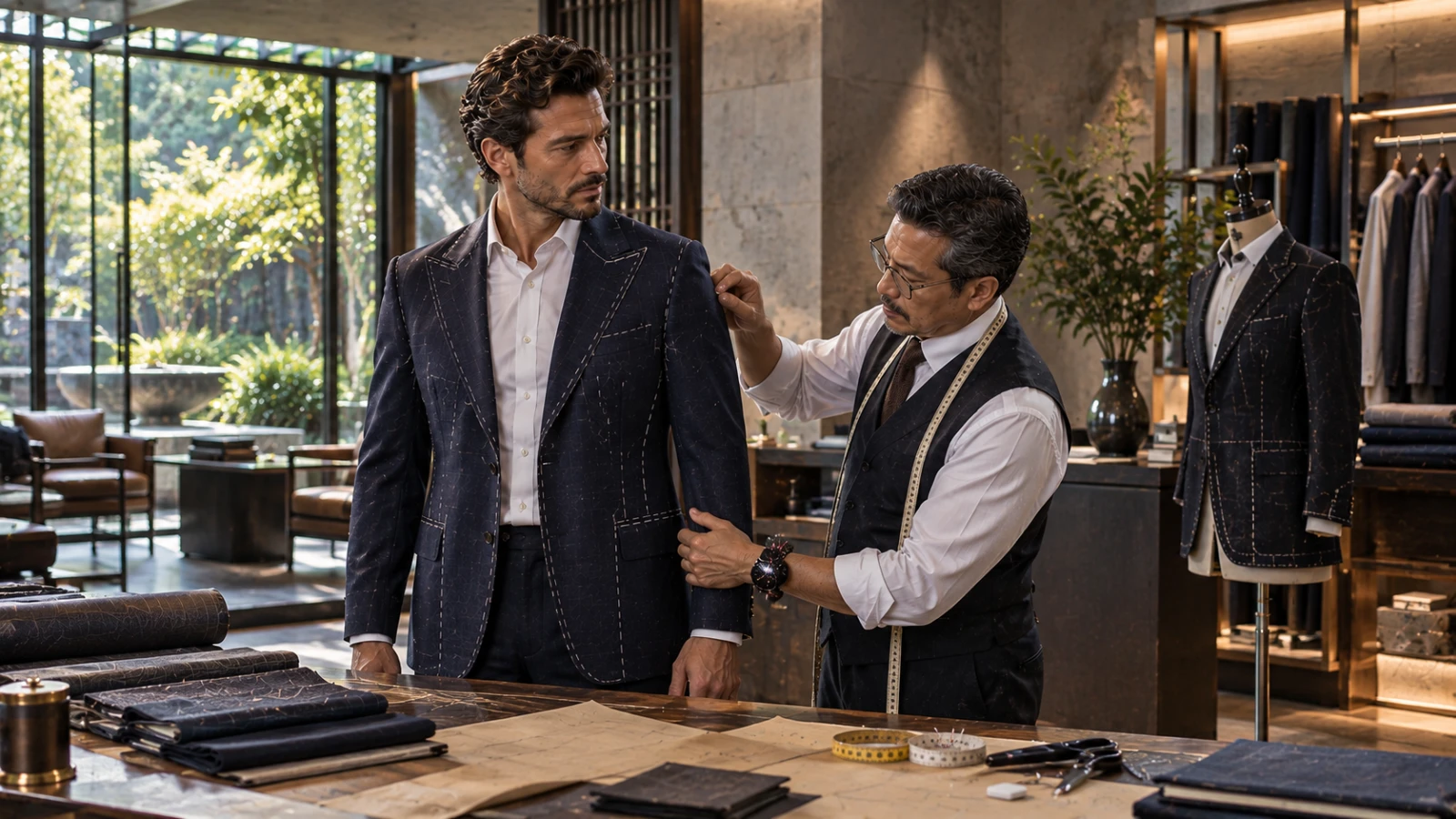
Made to Measure Suits in Chiang Mai: How the Process Works
Choosing Custom suits Chiang Mai is often presented as a simple decision: select a colour, choose a fabric and have the garment adjusted to your measurements. In reality, Made to Measure Suits in Chiang Mai involve a more considered process. The customer begins with a standard base pattern, but that pattern is adjusted to create a garment that better reflects the individual’s measurements, proportions and preferences.
This approach sits between ready-to-wear clothing and fully bespoke tailoring. It offers more personalization than buying a suit directly from a rack, while generally following a more streamlined production process than traditional bespoke tailoring. For customers who want a personalized fit without making the process unnecessarily complicated, made-to-measure can be an interesting option.
Chiang Mai has become an appealing destination for custom clothing because customers can combine tailoring with a visit to the city. International visitors may have only a few days available, while local professionals, wedding customers and frequent travelers may be looking for garments designed around their own requirements.
Understanding how Made to Measure Suits in Chiang Mai actually work can make the experience much easier. Rather than walking into a tailor shop and immediately choosing fabric, it helps to understand the stages involved and what decisions matter at each point.
What Are Made to Measure Suits in Chiang Mai?
Made-to-measure suits in Chiang Mai clothing begins with an existing base pattern. The tailor then adjusts that pattern according to the customer’s measurements and selected specifications.
This distinguishes made-to-measure from standard ready-to-wear clothing, where customers generally choose from predetermined sizes. A made-to-measure garment can account for differences in chest, waist, sleeve length, jacket length, trouser measurements and other proportions.
The process can also include style choices. Depending on the tailor, customers may be able to select lapel shapes, pocket styles, buttons, lining, trouser details and other design elements.
When considering Made to Measure Suits in Chiang Mai, it is useful to ask exactly how the tailor’s process works. Different businesses may offer different levels of customization, so the term itself should not be treated as a guarantee of a particular production method.
The important question is what happens between the first consultation and the finished suit.
Step One: The Initial Consultation for your Made to Measure Suits in Chiang Mai
The process normally begins with a conversation.
Before measurements are taken, the tailor should understand why you are ordering the suit. Is it for business? A wedding? Travel? Evening occasions? Regular professional use?
This information influences later decisions.
Someone who needs a suit for frequent business travel may need a different fabric and level of versatility from someone ordering a one-time wedding suit. A customer living in Chiang Mai may also have different fabric requirements from a visitor who intends to take the suit to a colder country.
A good consultation gives the customer an opportunity to explain personal preferences as well. You may prefer a classic silhouette, a contemporary shape, a softer shoulder or a more structured jacket.
The tailor’s role is not simply to record these preferences. The tailor should help translate them into practical garment decisions.
Why the Consultation Matters for every suit including the Made to Measure Suits in Chiang Mai
The consultation creates the foundation for the rest of the process.
If the customer says they want a slim suit, for example, the tailor may need to clarify whether they mean a modern silhouette or an extremely narrow fit. These can produce very different results.
Similarly, asking for a lightweight suit does not necessarily mean choosing the lightest available fabric. The tailor needs to consider durability, structure, drape and the conditions in which the suit will be worn.
The best Made to Measure Suits in Chiang Mai experience therefore begins with communication rather than a fabric catalogue.
Step Two: Selecting the Fabric
Once the purpose and style have been discussed, fabric becomes an important decision.
Fabric influences the way a suit looks, feels and behaves. Weight, weave, texture, drape, breathability and durability all contribute to the final result.
Chiang Mai’s climate makes these considerations particularly relevant. A customer who expects to wear the suit regularly in Thailand may prioritize breathable and appropriately weighted fabrics. Someone who travels between Thailand and Europe may want a fabric that offers greater versatility across different environments.
Wool remains popular for suits because of its range of weights and characteristics. Linen can provide a relaxed appearance and strong breathability. Cotton can work well for more casual tailoring, while certain blends can offer particular practical advantages.
When choosing Made to Measure Suits in Chiang Mai, avoid selecting fabric purely because it sounds luxurious. Ask what makes the fabric appropriate for your intended use.
Fabric Should Match the Lifestyle
A suit is not just a visual object. It has to perform in real situations.
If you travel frequently, consider how the fabric behaves after sitting for several hours or being packed into luggage. If the suit is primarily for formal indoor events, structure and drape may be more important.
Customers building a professional wardrobe may also want fabric that works with several shirts, shoes and accessories. This is where Premium Suits can become part of a broader wardrobe strategy rather than simply a one-time purchase.
A knowledgeable tailor should help connect these considerations.
Step Three: Taking Your Measurements
Measurements are one of the defining stages of the made-to-measure process.
The tailor may record chest, waist, hips, shoulder width, sleeve length, jacket length, trouser waist and other measurements. However, good measurement is not simply about collecting numbers.
Posture and body proportions matter as well.
One customer may have a naturally sloping shoulder, while another may have a more square shoulder line. One person may have longer arms relative to their torso. Another may require a different jacket balance because of their posture.
These details can influence how the base pattern is adjusted.
When ordering Made to Measure Suits in Chiang Mai, pay attention to how the tailor approaches the measurement process. You should feel that the measurements are being interpreted in relation to your body rather than simply entered into a form.
Fit Is More Than Being Tight
A common misunderstanding is that a well-fitted suit should feel extremely close to the body.
That is not necessarily the case.
Good fit involves balance. The jacket should sit properly across the shoulders and chest while allowing appropriate movement. Sleeves should have a proportionate relationship with the jacket and shirt. Trousers should sit comfortably and fall naturally.
The objective is not to make the suit as small as possible. It is to create a silhouette that looks intentional while remaining comfortable.
Step Four: Choosing the Style Details
Made-to-measure tailoring usually gives customers a range of choices beyond measurements.
Depending on the tailor, these may include lapel width and shape, jacket buttons, pocket style, vents, lining, trouser waistband, pleats, cuffs and other details.
These decisions can be exciting, but more customization is not always better.
A suit should have visual consistency. A formal business suit may benefit from restrained details, while a wedding suit can allow more individuality.
When considering Made to Measure Suits in Chiang Mai, think about the role the suit will play in your wardrobe.
A versatile navy suit, for example, may be designed to work with different shirt and shoe combinations. A distinctive wedding suit can be more closely connected to the event itself.
The tailor should help you understand how individual details affect the overall garment.
Step Five: Adjusting the Base Pattern
This is one of the most important distinctions between made-to-measure and standard ready-to-wear clothing.
Instead of simply selecting a size and making minor alterations after purchase, the base pattern is adjusted to reflect the customer’s measurements.
The degree of adjustment depends on the tailoring system and the business producing the garment.
A good made-to-measure process considers the relationship between different measurements. Increasing the chest while changing the waist, for example, can affect the overall balance of the jacket.
This is why technical understanding matters.
The goal is not to create a collection of isolated alterations. The objective is to produce a coherent pattern that reflects the wearer’s proportions.
Step Six: The First Fitting
Once the garment has reached the appropriate stage of production, the customer may return for a fitting.
This is an important opportunity to evaluate how the developing suit sits on the body.
The tailor may examine the shoulders, chest, waist, jacket length, sleeves, trousers and overall balance. The customer should also move naturally and communicate how the garment feels.
For customers choosing Made to Measure Suits in Chiang Mai, the fitting is particularly important if they have unusual proportions or specific preferences.
A fitting is not simply a chance to look in the mirror. It provides information that can help determine whether further adjustments are appropriate.
Communication During the Fitting in Made to Measure Suits in Chiang Mai
Customers sometimes hesitate to mention discomfort because they assume the tailor already knows what needs to be changed.
It is better to communicate.
If the sleeve feels too long, say so. If the jacket feels restrictive when you sit down, mention it. If you prefer slightly more room through the waist, discuss it.
At the same time, trust the tailor’s technical judgment. Some temporary characteristics of a developing garment may change during final construction.
The fitting works best as a conversation rather than a one-sided inspection.
Step Seven: Alterations and Refinement of your Made to Measure Suits in Chiang Mai
After the fitting, appropriate adjustments can be made before final completion.
This is where made-to-measure tailoring can provide an advantage over standard ready-to-wear clothing. The garment has already been developed around the customer’s measurements, and the fitting provides another opportunity to refine its proportions.
The exact alteration process depends on the construction and production system.
Customers should ask about this before ordering. Understanding what is included in the service makes the overall experience more transparent.
For tourists, timing is particularly important.
If you are leaving Chiang Mai on a specific date, tell the tailor before production begins. There needs to be enough time for fitting, alterations and final finishing.
Step Eight: Final Finishing your Made to Measure Suits in Chiang Mai
Once the necessary adjustments have been completed, the suit moves toward final finishing.
This stage may include pressing, buttonhole finishing, final inspection and other details that prepare the garment for collection.
The final inspection should consider more than whether the suit matches the original measurements. The garment should be checked for overall balance, finishing quality and presentation.
Small details can make a significant visual difference.
Clean stitching, correctly positioned buttons, properly finished trousers and a well-pressed jacket contribute to the impression of a finished garment.
This is particularly relevant when purchasing Business Suits because professional clothing often needs to maintain a polished appearance throughout repeated use.
How Long Does the Process of a Made to Measure Suits in Chiang Mai Take?
The timeline for made-to-measure tailoring depends on the tailor, garment, production process, fabric availability and number of fittings required.
Visitors to Chiang Mai should discuss timing during the first consultation rather than assuming that every suit can be completed within the same period.
A customer staying for several weeks has more flexibility than someone leaving in three days.
If you have a fixed departure date, communicate it immediately. The tailor can then explain what is realistically possible.
Fast production can be convenient, but speed should not become the only priority. Measurements, pattern adjustment, construction, fitting and finishing all need appropriate attention.
The right balance depends on the customer’s circumstances.
Made to Measure Suits in Chiang Mai for it’s Climate
Climate is one of the reasons fabric selection deserves careful attention.
Chiang Mai can be warm for much of the year, so customers who intend to wear their suits locally may want to consider breathability and fabric weight.
However, there is no single “Chiang Mai fabric.”
A customer who travels regularly may need something versatile enough for several climates. Someone attending an evening event may have different requirements from someone wearing a suit outdoors during the daytime.
A skilled tailor can help you make these distinctions.
The advantage of Made to Measure Suits in Chiang Mai is that the garment can be developed around the customer’s actual circumstances instead of being selected entirely from a fixed range of ready-made sizes and styles.
Made to Measure Suits in Chiang Mai vs Ready-to-Wear
Ready-to-wear clothing is produced in predetermined sizes and is generally designed to accommodate a broad range of body shapes.
Made-to-measure starts from a base pattern and adjusts it according to individual measurements and preferences.
This does not mean that made-to-measure is automatically better for every customer.
Someone who needs a suit immediately and is satisfied with standard sizing may prefer ready-to-wear clothing. Someone who struggles to find balanced proportions or wants specific fabric and design choices may appreciate the additional personalization of made-to-measure.
The important distinction is the process.
Made-to-measure gives the customer more influence over fit and design while generally keeping the production process more streamlined than fully bespoke tailoring.
Who Should Consider Made-to-Measure?
Made-to-measure can make sense for a wide range of customers.
It can be useful for professionals who wear suits regularly, customers who struggle with standard sizing, visitors looking for a personalized garment during a Chiang Mai trip and people building a more intentional wardrobe.
It can also be useful for wedding customers who want a suit that reflects their proportions and personal style.
Customers interested in Wedding Suits can discuss details such as colour, fabric, lapel style and silhouette while also ensuring that the garment is comfortable enough for a long day of ceremonies, photographs and celebrations.
The important point is to start with the intended use.
What Should You Ask a Tailor Before Ordering?
A few practical questions can make the process much clearer.
Ask what measurements are taken and how they are used. Ask whether the garment is based on an existing pattern and how that pattern is adjusted.
Ask what fabrics are available and which ones the tailor recommends for your intended use.
Ask about fittings and alterations. Ask how long the process normally takes and what happens if you are a visitor with a fixed departure date.
You can also ask what is included in the quoted price.
These questions are not about testing the tailor. They are about making sure both sides understand what is being ordered.
Choosing the Right Tailoring Experience
The value of Made to Measure Suits in Chiang Mai lies in the combination of personalization and practicality.
The process starts with a consultation, moves through fabric and style decisions, continues with measurements and pattern adjustments, and then progresses through fitting, refinement and final finishing.
Each stage contributes to the final garment.
The best experience is not necessarily the one with the largest fabric selection or the most complicated terminology. It is the one where the customer understands the process and feels that decisions are being made for a reason.
At Modern Tailor Studio, the aim is to make that process personal without making it confusing. Customers should understand why a particular fabric has been recommended, how their measurements influence the garment and what happens during the fitting stages.
For someone considering Best Tailor Chiang Mai, made-to-measure offers a practical middle ground between standard ready-to-wear clothing and more involved bespoke processes.
The finished suit should reflect the customer’s proportions, preferences and intended use while remaining comfortable enough for real life.
FAQs about Made to Measure Suits in Chiang Mai
What does made-to-measure mean?
Made-to-measure generally starts with an existing base pattern that is adjusted according to the customer’s measurements and selected specifications. The exact process can vary between tailors.
How do Made to Measure Suits in Chiang Mai differ from ready-to-wear suits?
Ready-to-wear suits are produced in standard sizes, while made-to-measure suits are adjusted around the customer’s measurements and can offer additional style customization.
How many measurements are taken for Made to Measure Suits in Chiang Mai?
The exact number varies by tailor and garment. A professional measurement process should consider the key dimensions needed to create balanced proportions rather than focusing only on chest and waist measurements.
Is Made to Measure Suits in Chiang Mai the same as bespoke?
No. The production processes can differ. Made-to-measure typically begins with an existing base pattern that is adjusted, while traditional bespoke tailoring generally involves a more individualized pattern development process. Customers should ask the tailor exactly what process is being offered.
How long do Made to Measure Suits in Chiang Mai take?
The timeline varies according to fabric availability, production, fittings and finishing. Customers with fixed travel dates should communicate their schedule before ordering.
Are Made to Measure Suits in Chiang Mai suitable for Chiang Mai?
They can be. Fabric weight, weave, construction and lining can all be selected with the intended climate and use in mind.
Can tourists order Made to Measure Suits in Chiang Mai?
Yes. Tourists can order custom clothing during their stay, but they should discuss their departure date at the beginning so the tailor can plan the process appropriately.
Is Made to Measure Suits in Chiang Mai worth the extra cost?
That depends on the customer’s priorities. Those who value personalized fit, fabric selection and design control may find the process useful, while customers satisfied with standard sizing may have different needs.
Making the Right Choice about Made to Measure Suits in Chiang Mai
Understanding Made to Measure Suits in Chiang Mai becomes much easier when the process is viewed as a series of connected decisions rather than a single purchase.
The consultation establishes the purpose of the garment. Fabric selection determines how it will look and perform. Measurements provide the foundation for the pattern adjustments. Style choices give the suit its individual character. Fittings provide an opportunity to refine the result, while final finishing completes the garment.
None of these stages should be considered in isolation.
A suit designed for a business professional may require different decisions from one created for a wedding. A customer living in Chiang Mai may have different fabric requirements from a traveler taking the garment to Europe. Someone building a versatile wardrobe may prioritize different colours and fabrics from someone ordering a statement piece.
That is the practical appeal of made-to-measure tailoring. Made to Measure Suits in Chiang Mai represents luxury and power. We aim to provide that feel of Made to Measure Suits in Chiang Mai at affordable prices so everyone can have the feel of owning Made to Measure Suits in Chiang Mai .
It allows the garment to be shaped around the person while keeping the overall process understandable and purposeful. For customers visiting Modern Tailor Studio, the objective is not simply to produce clothing with customized measurements. It is to create garments that make sense for the individual, the environment and the occasions in which they will be worn.
When the process is handled carefully, the final suit should not feel like a standard garment that has simply been adjusted. It should feel like clothing that was planned with the wearer in mind from the beginning.