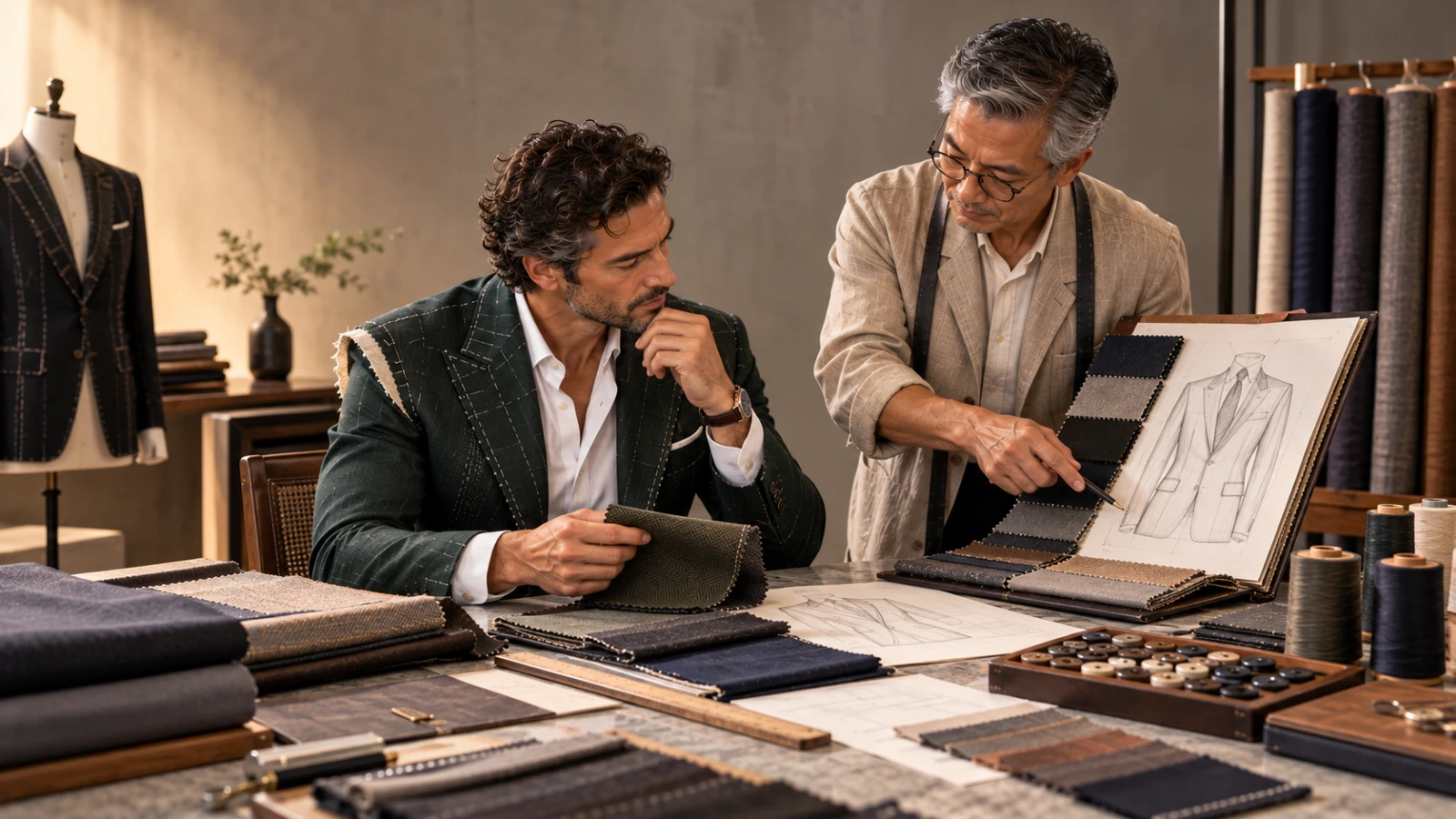
Custom Suit Design in Chiang Mai: From Fabric to Final Detail
For professional wardrobes, Business Suits should ideally be designed with the shirts and shoes you already own in mind.A tailored suit does not begin with a sewing machine. It begins with a decision about how the finished garment should look, feel, and function. Custom Suit Design in Chiang Mai is the process of turning that idea into a complete garment, starting with fabric and moving through colour, silhouette, measurements, construction, fittings, and the small details that ultimately define the finished suit. For tourists, Custom Suit Design in Chiang Mai can initially seem overwhelming because there are many choices to make during a relatively short visit.
You may be shown dozens of fabrics, different lapel styles, buttons, linings, pockets, trouser options, and silhouettes. The key is understanding which decisions actually matter and how they work together. A well-designed custom suit should not look like a collection of individually impressive details. The fabric, cut, proportions, construction, and finishing should create one coherent garment. That is what makes Custom Suit Design in Chiang Mai different from simply choosing a suit from a rack.
What Does Custom Suit Design Actually Involve?
At its simplest, Custom Suit Design in Chiang Mai means developing a suit around the individual rather than starting with a completely fixed standard size and appearance. The process usually begins with a consultation. The tailor needs to understand why you want the suit, where you will wear it, how frequently you expect to use it, and what type of image you want the garment to create.
A business suit may require a restrained silhouette and versatile colour. A wedding suit may allow more personality. A suit for travel might prioritize breathable fabric and comfortable construction. This first conversation gives direction to the rest of the design. Without it, fabric and style choices can become disconnected. For visitors exploring Custom Suits in Chiang Mai, the consultation is therefore an important starting point rather than a formality.
Start With the Fabric
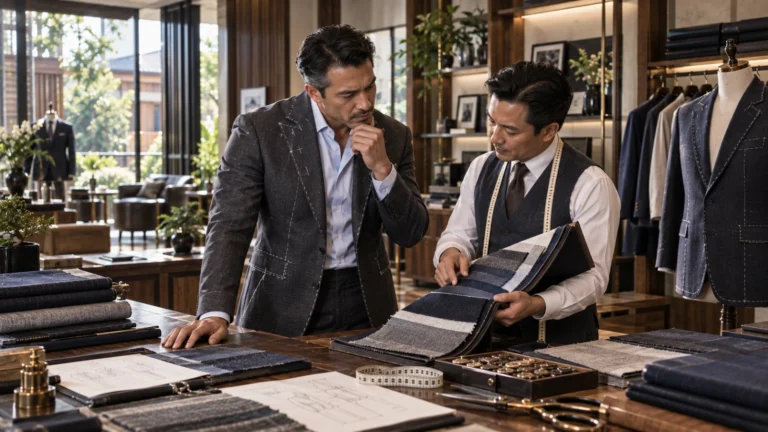
Fabric is usually one of the first major decisions in Custom Suit Design in Chiang Mai, and it influences almost every other choice. Wool remains one of the most versatile suit fabrics because it can provide a combination of drape, resilience, breathability, and formal appearance. Different weights and weaves can create very different wearing experiences.
Linen offers a more relaxed character and can be particularly attractive for warm-weather dressing. Cotton can create a softer, more casual aesthetic, while silk blends and other specialty fabrics can introduce distinctive texture and visual depth. When choosing fabric, think beyond how it looks under shop lighting. Consider where the suit will be worn, what climate it will encounter, how often you will use it, and what other garments you already own.
For someone looking for a refined wardrobe, Premium Suits can be useful as a reference point for understanding how premium cloth, construction, and styling work together.
Consider Chiang Mai’s Climate
Climate is an important part of Custom Suit Design in Chiang Mai because the ideal fabric and construction depend partly on how and where the garment will be worn. Chiang Mai can be warm, particularly during the daytime, so a heavy and highly structured suit may not always be the most practical choice for regular use.
However, tourists often take their suits home. A European traveller may want a garment that works in Chiang Mai during the trip but is equally useful during cooler seasons back home. This is why the tailor should know your final destination and intended use. A suit designed for an air-conditioned office requires different considerations from one intended for outdoor daytime events.
Breathability, lining, fabric weight, and construction can all influence comfort.
Choosing the Right Colour
Colour is one of the most visible decisions in Custom Suit Design in Chiang Mai. Navy and charcoal are versatile options for business wardrobes because they can be combined with a wide range of shirts, shoes, and accessories. Mid-grey can offer another adaptable choice.
Brown, olive, beige, cream, and lighter shades can create a more relaxed character, particularly when combined with linen or cotton. For formal evening occasions, darker colours generally create a different visual impression from lighter daytime fabrics. The best colour is not necessarily the most unusual one. Think about how many times you expect to wear the suit and what you already own. The collar of your shirt should also work with the jacket lapels and overall proportions.
If this is your first custom suit, versatility may be more valuable than choosing an extremely distinctive shade.
Choosing the Jacket look
Once fabric and colour are established, Custom Suit Design in Chiang Mai moves into silhouette. The silhouette describes the overall shape of the jacket. It includes the relationship between shoulders, chest, waist, jacket length, sleeves, and trousers.
A modern tailored silhouette may create a defined waist without becoming excessively tight. A classic silhouette may provide more room and a more traditional proportion. The important point is that fit and silhouette should work with your body rather than forcing your body into a predetermined shape. Your height, shoulder structure, torso length, posture, and personal preference all matter.
For professional wardrobes, Winter suits should ideally be designed with the shirts and shoes you already own in mind. A skilled tailor can interpret a style reference while adapting it to your proportions.
Lapels Change the Character of the Suit
Lapel design is a relatively small detail that can have a noticeable impact on Custom Suit Design in Chiang Mai. Notch lapels are versatile and common in business tailoring. Peak lapels can create a stronger and more formal appearance, while shawl lapels are particularly associated with eveningwear.
Lapel width also matters. A very narrow lapel creates a different visual proportion from a broader one. The ideal width should relate to your body and the overall design of the jacket. It should not be chosen simply because a particular width happens to be fashionable.
For a first business suit, a balanced lapel can provide more long-term versatility.
Button Position and Jacket Proportion
The position of the jacket buttons affects how the upper body is visually divided. A higher button stance can create a different relationship between chest and waist from a lower stance. The choice should work with the wearer’s torso length and desired silhouette.
In Custom Suit Design in Chiang Mai, this decision should be made alongside jacket length and lapel design rather than independently. When several individual details are chosen without considering the complete garment, the final result can become visually inconsistent.
A good design process keeps these elements connected.
Jacket Length Matters
Jacket length is one of the easiest ways to change the proportions of a suit. A jacket that is too short can make the torso appear compressed, while one that is too long can create a heavier appearance.
There is no universal measurement that works identically for every person. Height, torso length, trouser rise, shoulder proportion, and preferred style all influence the appropriate length. During Custom Suit Design in Chiang Mai, the tailor should consider the complete silhouette rather than selecting jacket length in isolation.
This becomes especially important for tourists who may bring reference photographs. The jacket length in a photograph may look excellent on the model but need modification for your own proportions.
Trousers Complete the Design
A suit is not only a jacket. Trouser design has a major influence on the overall appearance. During Custom Suit Design in Chiang Mai, you may need to decide on trouser rise, waistband style, pleats, cuffs, leg width, and break.
A higher rise can create a more traditional proportion and can work particularly well with certain jacket styles. A lower rise creates a different contemporary silhouette. Pleats can provide additional room and a classic character, while flat-front trousers create a cleaner appearance.
Trouser width should also relate to the jacket. Extremely narrow trousers combined with a structured jacket can produce a different visual balance from a more moderate leg.
Shirt and Suit Compatibility
If you are building a wardrobe rather than buying one isolated garment, think about what shirts you will wear with the suit. A navy suit may work with white, light blue, pink, and various patterned shirts. A more distinctive suit colour can require greater consideration when building combinations.
This makes Custom Suit Design in Chiang Mai more practical because the finished garment becomes part of an existing wardrobe rather than an item that only works with one particular combination.
Wedding Suit Design Requires More Planning
Wedding tailoring involves more than selecting a fashionable suit. If you are planning a wedding outfit, Custom Suit Design in Chiang Mai should consider the ceremony, venue, time of day, wedding photographs, footwear, accessories, and the overall style of the event.
The suit should also be comfortable enough to wear for many hours. Colour becomes particularly important because wedding photographs can capture the garment from many angles and under different lighting conditions.
For grooms exploring Wedding Suits, it can help to establish the overall wedding aesthetic before finalizing the fabric and details.
Choosing Buttons and Hardware
Buttons may appear minor, but they can influence the final character of the jacket. Horn-style buttons, corozo, metal, resin, and other materials can create different impressions. A dark button can keep a business suit restrained, while a contrasting button can introduce more personality.
The button choice should complement the cloth rather than compete with it. The same principle applies to trouser fastenings and other hardware. Good Custom Suit Design in Chiang Mai usually treats these small details as part of the overall composition.
Selecting the Lining
The inside of the jacket offers an opportunity for personalization. A classic solid lining can create a discreet finish, while a subtle pattern can provide character without changing the exterior appearance.
For a formal business suit, many clients prefer something understated. A wedding or occasion suit may allow more creative expression. Lining weight is also worth discussing in Chiang Mai’s climate. A lightweight construction can feel different from a heavily structured jacket with substantial internal layers.
Do not choose a lining solely because its colour looks attractive on a fabric book. Think about how it contributes to the entire garment.
Pockets and Their Placement
Pocket design affects both function and proportion. Flap pockets are versatile for many business suits. Jetted pockets create a cleaner, more formal appearance, while patch pockets can give a jacket a more relaxed character.
The position of the pockets also affects the visual balance of the jacket. During Custom Suit Design in Chiang Mai, pocket choices should therefore be considered alongside jacket length, button stance, lapel width, and intended use.
A good design is rarely about maximizing the number of decorative options. It is about choosing details that support the overall garment.
Construction Influences the Final Look
Design and construction are closely connected. A structured jacket can create a more formal silhouette, while a softer construction may feel more relaxed and lightweight.
Canvas, interlinings, shoulder padding, sleeve construction, and pressing techniques all influence how the finished garment sits. This means Custom Suit Design in Chiang Mai should not stop at exterior appearance. Ask what is happening underneath the fabric as well.
If you are comparing tailoring options, understanding construction helps you make a more informed comparison than simply looking at the price or fabric name.
Measurements Turn the Design Into Your Garment
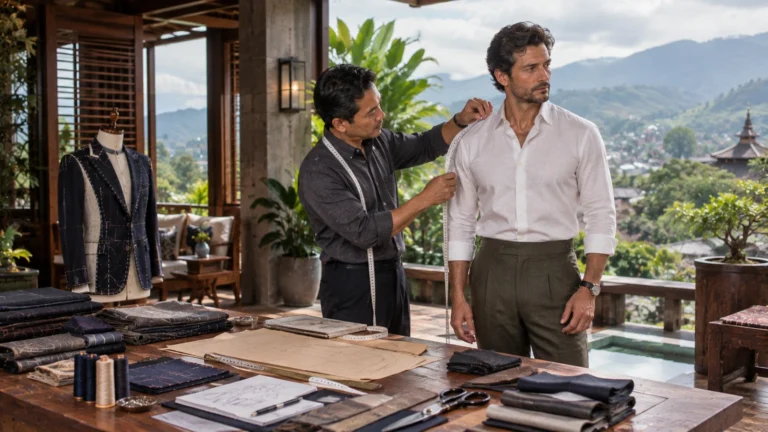
Once the design direction is established, measurements translate it into an individual pattern. The tailor may measure your chest, waist, shoulders, neck, arms, hips, thighs, inseam, and other areas. Posture and natural stance may also be observed.
The measurements are not simply transferred mechanically. They need to be interpreted according to the intended silhouette and construction. A client asking for a contemporary close-fitting suit may require different allowances from someone who wants a more relaxed business garment.
This is where Custom Suit Design in Chiang Mai becomes genuinely individual. The design is adapted to a real person rather than remaining a generic sketch.
Custom Suit Design in Chiang Mai – The First Fitting
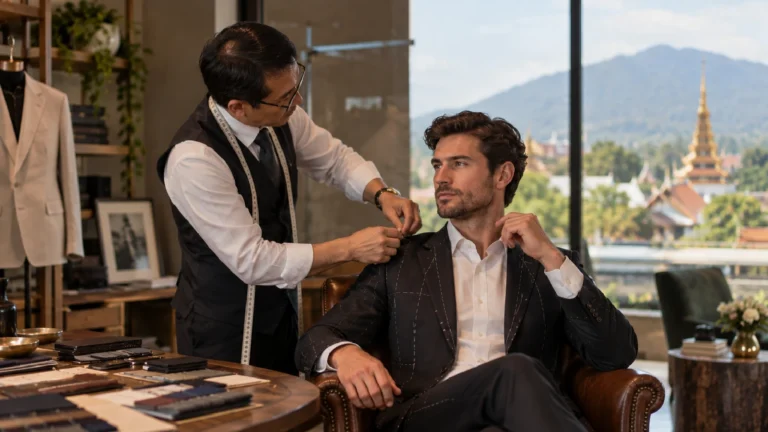
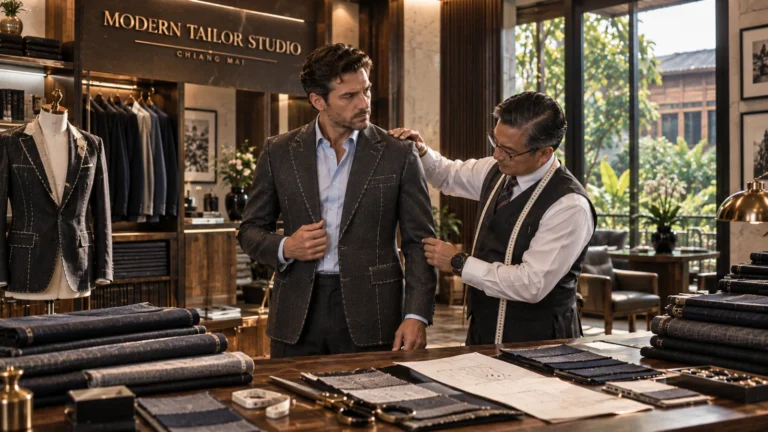
The first fitting provides an opportunity to compare the design concept with the actual garment. The tailor can check shoulder balance, chest, collar, sleeves, jacket length, waist suppression, trousers, and overall proportions.
Temporary stitching may be visible, and the garment may not yet look finished. That is normal. Move naturally during the fitting. Sit down, walk, raise your arms, and tell the tailor if anything feels restrictive.
A fitting is not merely an inspection of measurements. It is a chance to evaluate how the design behaves on the body.
Small Adjustments Can Change the Whole Appearance
One of the interesting aspects of Custom Suit Design in Chiang Mai is how relatively small changes can influence the complete garment. A few centimetres in jacket length can alter proportions. A slight change in sleeve length can make the jacket appear more refined. Adjusting trouser break can change the relationship between trousers and shoes.
This is why the fitting stage deserves attention. Instead of rushing through it, look at the suit from the front, side, and back. Consider both appearance and movement.
Custom Suit Design in Chiang Mai – How Tourists Should Plan the Process
Tourists have one additional design consideration: time. If you are visiting Chiang Mai for only a few days, tell the tailor your departure date before ordering.
A custom suit may involve consultation, fabric selection, measurements, production, fitting, adjustments, and collection. The exact timeline depends on the tailor and garment. Do not assume that every custom order follows the same schedule.
When planning Custom Suit Design in Chiang Mai, leave enough time for at least the fitting process that your tailor recommends. If your schedule is extremely short, ask what can realistically be completed before you leave.
Custom Suit Design in Chiang Mai – What to Bring to the Appointment
Preparation can make Custom Suit Design in Chiang Mai easier. Bring shoes similar to those you expect to wear with the suit. If possible, bring a shirt that reflects how you normally dress.
Reference photographs can also be useful. They help communicate the silhouette, lapel style, trouser shape, or overall aesthetic you prefer. If you already own a suit that fits particularly well, bring it as a reference.
However, remember that a reference photograph should inspire the design rather than be copied without adaptation. Your body proportions are different from the model’s.
Avoid Designing Every Detail Separately
One common mistake is choosing each available option simply because it is available. A customer may select a distinctive lining, unusual buttons, contrasting stitching, wide lapels, patch pockets, pleated trousers, and another bold detail individually. Each may look attractive on its own, but together they can create a garment without a clear visual direction.
Good Custom Suit Design in Chiang Mai is usually more restrained. Choose a central design idea and allow the details to support it.
For example, a sophisticated business suit might use a dark navy cloth, moderate notch lapels, restrained buttons, clean trousers, and a subtle lining. A summer travel suit might take a softer and more relaxed approach.
Custom Suit Design in Chiang Mai – Ask the Tailor to Explain the Design
You do not need to know tailoring terminology before your appointment. Ask why a particular fabric has been recommended. Ask why the tailor prefers a certain lapel width or jacket length for your proportions.
Ask how the construction will affect comfort and whether the chosen fabric is practical for your intended destination. These conversations make Custom Suit Design in Chiang Mai more collaborative.
A good tailor should be able to explain the reasoning behind important choices rather than simply asking you to select from a menu.
Frequently Asked Questions about Custom Suit Design in Chiang Mai
What is the first step in Custom Suit Design in Chiang Mai?
The process usually begins with a consultation about the purpose of the suit, preferred style, fabric, colour, budget, and intended use. Measurements and detailed design decisions follow.
Which fabric is best for a suit in Chiang Mai?
There is no single best fabric for everyone. Wool, linen, cotton, blends, and other fabrics can all be appropriate depending on climate, occasion, destination, and personal preference.
Should tourists choose a lightweight suit?
A lightweight suit can be practical for warm conditions, but the right choice depends on where the garment will ultimately be worn. Discuss your travel itinerary and home climate with the tailor.
How important are lapels?
Lapels have a noticeable effect on the visual character and proportions of a jacket. Width and style should complement your body and the intended purpose of the suit.
How many fittings are required?
The number varies according to the tailor, construction method, garment, and amount of adjustment required. Ask about the fitting schedule before placing your order.
Can I bring a photograph of a suit I like?
Yes. Photographs can be useful references for communicating design preferences, but the tailor should adapt the idea to your proportions rather than simply copying the model.
Making the Right Choice
The best Custom Suit Design in Chiang Mai is not the one with the greatest number of options. It is the one where the major decisions work together. Fabric should suit the climate and purpose. Colour should work with your wardrobe. Lapels, button stance, jacket length, trousers, pockets, lining, and construction should create a coherent silhouette.
Measurements and fittings then turn that design into a garment that works with your body. For tourists, the process becomes much easier when you know your purpose and schedule before entering the tailoring studio. Tell the tailor where you will wear the suit, how often you expect to use it, and what kind of fit you prefer.
If you want to understand the broader process, exploring Custom Tailoring Services in Chiang Mai can help you see how consultation, design, measurements, construction, and fitting connect.
Start Your Tailoring Journey of Custom Suit Design in Chiang Mai
A successful Custom Suit Design in Chiang Mai journey is ultimately about making deliberate choices rather than collecting fashionable details. Start with the purpose of the suit. Choose a fabric that makes sense for your climate and lifestyle. Establish the silhouette before selecting small details. Allow the tailor to adapt the design to your proportions, and take the fitting stage seriously.
The result should be a suit that looks considered from a distance and rewarding up close. Every visible detail should have a reason, while the hidden construction should support comfort, shape, and durability. For travellers who want to build a more versatile wardrobe, Custom Suits Chiang Mai can be a useful starting point for exploring different fabrics, silhouettes, and occasions without losing sight of the individual behind the garment.